

From the outside, your life probably looks solid.
You show up to work.
You keep your responsibilities.
People depend on you—and you rarely let them down.
You might even be the person others lean on when things get difficult.
But there’s another version of the story that most people don’t see.
The nights when sleep doesn’t come easily.
The constant tension in your chest that never quite shuts off.
The drink at the end of the day that started as a way to relax but now feels like the only way to slow your mind down.
Many high-functioning veterans reach a point where they realize something important:
Strength has helped them survive.
But it hasn’t brought them peace.
When that realization arrives, many start looking at structured recovery environments like a veterans program not because they’ve lost everything—but because they’re tired of living in constant pressure.
Strength Is a Skill Veterans Learn Early
Military training builds resilience in ways most civilians never experience.
You learn to operate under extreme pressure.
You learn to keep going when you’re exhausted.
You learn to push emotions aside so the mission stays clear.
These traits save lives in combat.
And they don’t disappear when service ends.
Many veterans carry that same mindset into civilian life. They become the employee who never quits, the parent who always provides, the friend who shows up when things get difficult.
From the outside, it looks admirable.
But strength without recovery can become something else entirely: chronic survival mode.
The High-Functioning Illusion
One of the biggest challenges high-functioning veterans face is that their struggles are easy to hide.
You’re still productive.
You still show up.
You still meet expectations.
Because of that, it’s easy to convince yourself that everything is under control.
Many veterans say the same things when they first start thinking about getting help:
- “I’m not that bad.”
- “Other people need it more than I do.”
- “I’m still handling my responsibilities.”
But functioning isn’t the same thing as stability.
You can maintain a career while feeling emotionally drained.
You can provide for your family while feeling disconnected from them.
You can look strong to everyone else while quietly running on empty.
That gap between how things look and how they feel is where many veterans live for years.
When Coping Starts Turning Into Dependence
For some veterans, alcohol or substances enter the picture slowly.
At first, it’s just a way to relax after a stressful day.
A way to fall asleep.
A way to quiet thoughts that won’t stop replaying.
Over time, that coping mechanism can become routine.
What started as occasional becomes daily.
It may still look controlled from the outside. Many high-functioning veterans continue working, maintaining relationships, and managing responsibilities.
But inside, the pattern begins to shift.
Instead of helping you unwind, substances start becoming the only way to shut the mind off.
And that’s when many veterans begin asking themselves a difficult question:
How long can I keep doing this?
The Nervous System That Never Learned to Power Down
One thing clinicians often see in high-functioning veterans is a nervous system that stays stuck in high-alert mode.
Military service trains the brain to scan for threats constantly.
That level of awareness can save lives during deployment.
But once someone returns home, the brain doesn’t always switch back easily.
Many veterans describe the same symptoms:
- Difficulty relaxing even in safe environments
- Sleep that feels light and restless
- Irritability or sudden anger
- A constant sense of internal pressure
When the nervous system never fully settles, people often try to manage it the only ways they know how: control, discipline, or substances.
Structured recovery environments focus on calming that nervous system so healing can begin.
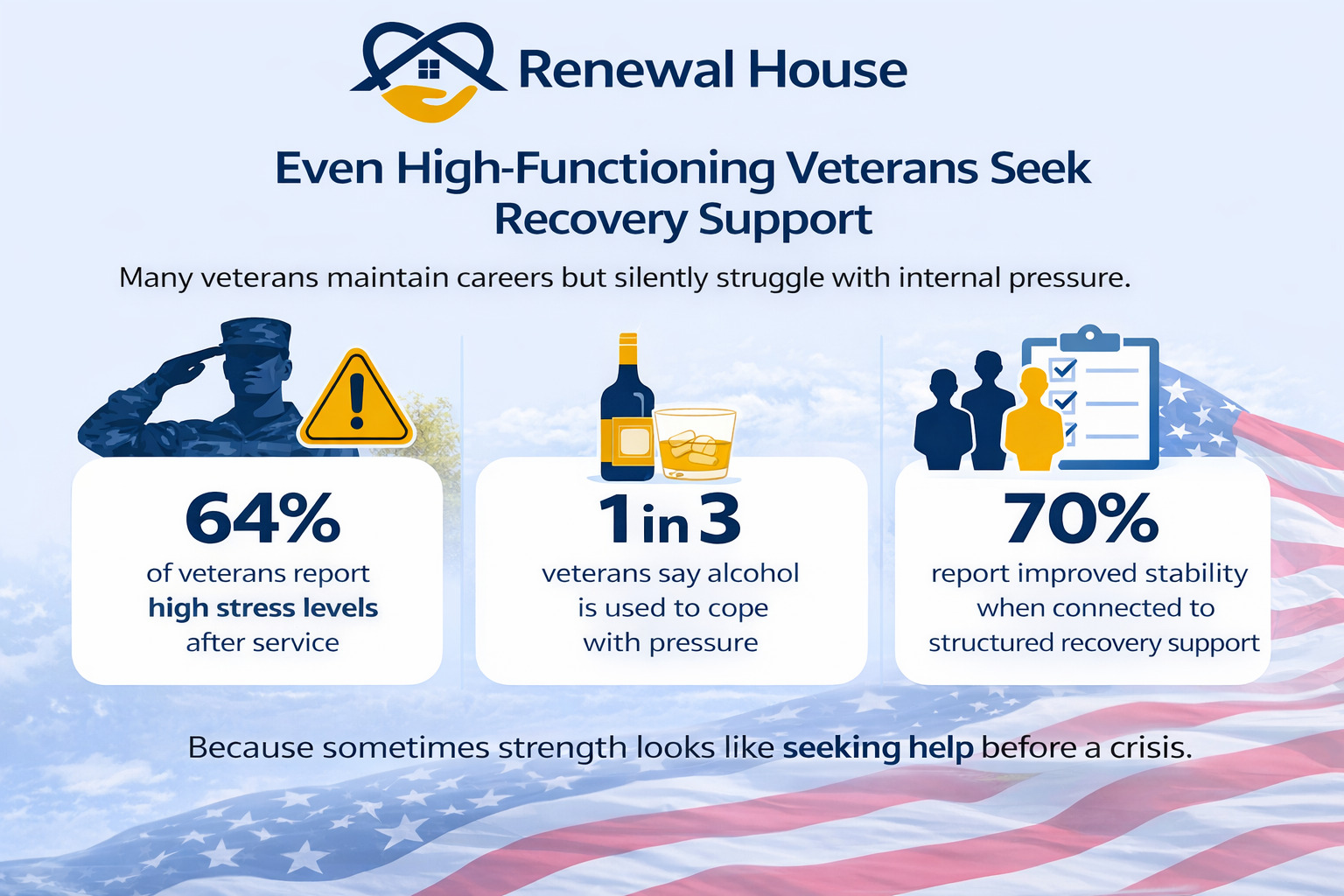
Why High-Functioning Veterans Seek Help Before Collapse
Contrary to popular belief, many veterans don’t seek support because everything fell apart.
They seek support because they see where things are heading.
They notice the patterns forming.
The drinking that’s becoming routine.
The emotional distance growing in relationships.
The exhaustion that no weekend seems to fix.
Instead of waiting for crisis, they choose to intervene early.
That choice often reflects something veterans understand well:
Leadership means addressing problems before they become emergencies.
What Structured Recovery Provides That Willpower Cannot
Many high-performing veterans rely on discipline to handle stress.
But discipline alone doesn’t heal trauma or emotional burnout.
Structured recovery environments introduce something different.
They provide:
- Consistent daily routines
- Therapeutic support designed for veterans
- Peer connection with others who share similar experiences
- Tools for managing stress without relying on substances
Structure allows the nervous system to slow down in ways that constant self-control cannot.
For many veterans, the first noticeable change is surprisingly simple.
They sleep better.
And once sleep improves, everything else begins shifting too.
The Moment Many Veterans Recognize Themselves
There’s often a moment when high-functioning veterans realize the life they’re maintaining isn’t the same as the life they want.
Maybe it happens during a quiet night after everyone else has gone to sleep.
Maybe it happens during a conversation with a spouse who gently asks if everything is really okay.
Or maybe it happens during a moment of honest reflection when the thought appears:
I’ve been surviving for years, but I’m not actually living.
That realization can be uncomfortable.
But it can also be the beginning of change.
Stability Is a Different Kind of Strength
For many veterans, strength has always meant endurance.
Push through the pain.
Handle the pressure.
Keep moving forward.
But stability asks something different.
It asks whether life can feel calm again.
It asks whether you can wake up without tension already sitting in your chest.
It asks whether your mind can finally rest instead of constantly preparing for the next problem.
Many veterans who pursue recovery discover something unexpected.
The strength that carried them through service can also carry them through healing.
It just needs the right environment to work.
Frequently Asked Questions
Why do high-functioning veterans struggle with substance use?
Many veterans rely on discipline and performance to manage stress after military service. Substances can gradually become a way to relax, sleep, or quiet intrusive thoughts.
Because high-functioning veterans often maintain careers and responsibilities, these patterns may remain hidden for years.
Do you have to lose everything before seeking help?
No. Many veterans seek support before reaching a crisis point.
Recognizing unhealthy patterns early—such as increasing alcohol use, emotional exhaustion, or sleep disruption—can lead to earlier intervention and more stable recovery.
Why does military experience make emotional regulation harder?
Military service often trains the nervous system to remain alert and responsive to potential threats.
After returning to civilian life, this heightened awareness may continue, leading to anxiety, sleep difficulties, or emotional volatility.
Recovery environments help veterans gradually retrain the nervous system to feel safe again.
What makes veteran-focused recovery environments different?
Veteran-focused environments include peers and clinicians who understand military culture and experiences.
This shared understanding often helps veterans feel more comfortable discussing difficult topics and reduces the sense of isolation many experience in traditional settings.
How do I know if it’s time to consider support?
Many veterans begin considering support when they notice:
- Increased reliance on alcohol or substances
- Chronic stress that doesn’t improve with rest
- Emotional distance from family or friends
- Difficulty sleeping or relaxing
Recognizing these patterns early can help prevent deeper burnout.
A Different Direction Is Possible
If you’re a high-functioning veteran who feels like life has become a constant effort to stay in control, you’re not alone.
Many veterans eventually realize that strength doesn’t have to mean carrying everything by yourself.
You can explore support through our veterans program and find treatment options in Charleston or support in the Eastern Panhandle of West Virginia depending on what feels accessible.
Call 304-601-2279 or visit our veterans program services to learn more about our veterans program services in Comfort, West Virginia.
Sometimes the strongest veterans aren’t the ones who endure the most pressure.
They’re the ones who recognize when it’s time to stop carrying it alone.
