

Sometimes the shift happens slowly. Other times it feels sudden and frightening.
A veteran you love—your son or daughter—may start acting in ways that feel unfamiliar. Their mood changes quickly. Sleep becomes irregular. Conversations feel tense, short, or emotionally distant.
You might be asking yourself questions no parent ever wants to face:
Is something seriously wrong?
Why can’t they seem to settle down?
How do I help them without pushing them away?
When a young adult veteran enters a period of emotional instability, families often feel helpless. The good news is that recovery environments built for veterans can provide the stability and structure many people need during these moments.
If you’re trying to understand what support might look like, learning about a specialized veterans program can help you see how structured care begins to restore balance during difficult periods.
When Emotional Instability Starts Showing Up
Parents often notice the warning signs before anyone else.
It might begin with small changes. Sleep patterns shift. Your child becomes withdrawn or irritable. The things they once cared about suddenly don’t seem to matter.
Over time, those changes can intensify.
Emotions become unpredictable.
Anger or sadness appears quickly and without warning.
Conversations that used to feel easy now feel tense.
For veterans, emotional instability often grows out of multiple pressures happening at once.
Some may still be carrying the weight of experiences from military service. Others struggle with the sudden transition from military life to civilian expectations. Some turn to alcohol or substances as a way to quiet stress or memories they can’t easily explain.
From the outside, it can feel confusing.
From the inside, it often feels overwhelming.
Why Structure Can Calm the Chaos
When someone is emotionally overwhelmed, their world can start to feel chaotic.
Simple routines fall apart. Days blur together. Sleep becomes irregular, and decision-making becomes exhausting.
Structure is one of the most powerful ways to stabilize that chaos.
Recovery environments provide predictable daily rhythms that help the brain settle:
- Consistent wake-up and sleep schedules
- Regular meals
- Guided therapeutic conversations
- Group support with peers
- Physical activity and wellness practices
Predictability sends an important message to the nervous system: things are safe enough to slow down.
For many veterans, this stability is the first step toward emotional recovery.
Why Military Experience Changes How Stress Shows Up
Military service trains the mind and body in very specific ways.
Veterans are taught to stay alert.
To respond quickly to danger.
To push through exhaustion and emotional discomfort.
These abilities are essential during service.
But once someone returns home, those same survival skills can become difficult to turn off.
The brain may remain in a state of high alert long after the immediate danger is gone.
This can lead to:
- Chronic anxiety or hypervigilance
- Difficulty relaxing or sleeping
- Irritability or sudden emotional reactions
- A sense of disconnection from everyday life
When emotional instability appears, it’s often the nervous system trying to process experiences that never had a safe space to be understood.
Structured recovery environments help veterans slowly transition out of survival mode and back into a steadier emotional rhythm.
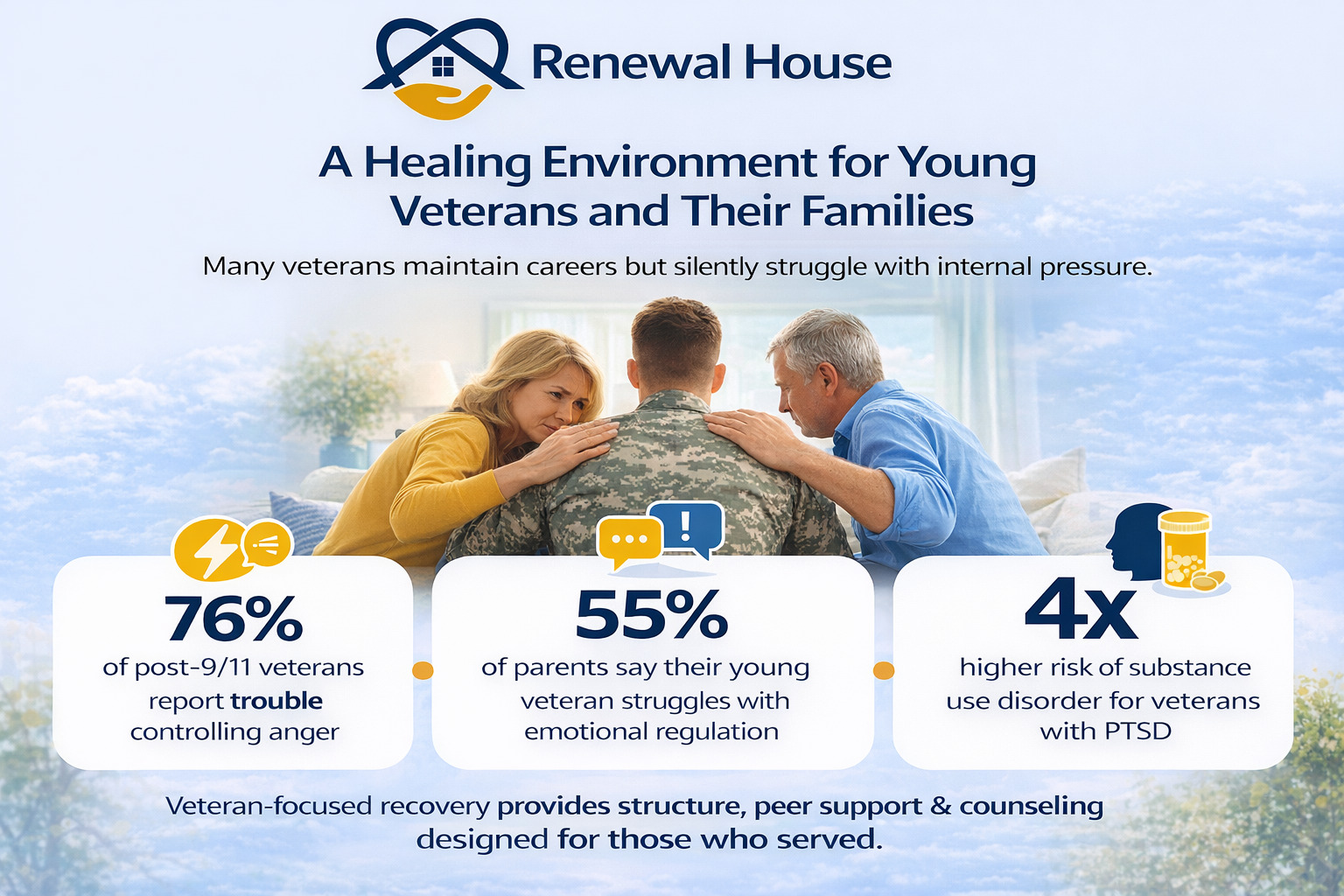
The Power of Being Around Other Veterans
One of the most meaningful parts of veteran-focused recovery environments is peer connection.
Veterans often carry experiences that are difficult to explain to people who have never served.
In a room full of civilians, they may feel misunderstood or hesitant to share.
But when veterans sit with other veterans, something shifts.
Someone might mention a moment from deployment.
Instead of confusion, others in the room simply nod.
No explanation required.
That shared understanding can lower emotional defenses and allow honest conversations to begin.
For parents watching their child struggle, this kind of connection can become a turning point.
Isolation slowly begins to fade.
Rebuilding Stability Through Daily Routine
Routine may sound simple, but for someone experiencing emotional instability, it can be life-changing.
A consistent schedule reduces stress on the brain.
Instead of waking up to a day filled with uncertainty, veterans move through a supportive rhythm designed to encourage healing.
Daily activities often include:
- Individual therapy sessions
- Group discussions with peers
- Physical activity or movement-based wellness
- Skills for managing stress and emotions
- Time for reflection and rest
These routines help retrain the brain to move away from constant stress responses.
Over time, emotional reactions become less intense. Sleep improves. Conversations become easier.
Progress may be gradual, but it becomes visible.
Healing the Nervous System, Not Just Behavior
Many families initially focus on visible behaviors—anger, substance use, withdrawal, or impulsive decisions.
But emotional instability often begins deeper in the nervous system.
Trauma, stress, and prolonged high-alert environments can leave the brain feeling like danger is always nearby.
Recovery environments support nervous system healing through multiple approaches:
- Therapeutic conversations that process difficult experiences
- Movement and physical activity that release built-up tension
- Mindfulness practices that help regulate emotional reactions
- Supportive community that reduces isolation
When the nervous system begins to feel safer, behavior often begins to stabilize naturally.
This is why recovery environments focus on the whole person—not just symptoms.
What Parents Often Notice First
Parents sometimes expect dramatic changes.
But recovery usually begins with quieter shifts.
Your child may begin sleeping more consistently.
They might start communicating more openly.
Anger softens into frustration that can be talked about.
These early changes can feel small, but they often signal that stability is beginning to return.
Healing doesn’t happen overnight.
But with the right support, the emotional storms that once felt constant can gradually settle.
Frequently Asked Questions
Why do some veterans experience emotional instability after service?
Military service exposes individuals to high levels of stress and intense experiences. After returning home, the nervous system may remain in a heightened state of alertness.
This can lead to anxiety, sleep disturbances, mood swings, and difficulty adjusting to civilian life.
How can structured recovery environments help stabilize emotions?
Structured environments provide predictable daily routines, therapeutic support, and peer connection.
This combination helps calm the nervous system, rebuild healthy habits, and provide emotional safety for deeper healing.
Why is peer support important for veterans?
Veterans often feel more comfortable speaking openly with others who understand military culture and experiences.
Shared understanding reduces isolation and helps individuals process difficult memories without feeling judged or misunderstood.
How long does emotional stabilization usually take?
Every person’s healing process is different.
Some individuals begin noticing improvements within weeks as routines and therapeutic support begin to stabilize their nervous system. For others, recovery may take longer.
The important thing is that progress often becomes visible once the right support system is in place.
What can parents do while their child is seeking support?
Parents can focus on maintaining open communication, practicing patience, and seeking guidance from professionals who understand veteran recovery.
Remember that emotional healing is a process, and families are an important part of the support system.
A Path Forward for Families
Watching your child struggle emotionally can be one of the most painful experiences a parent faces.
You may feel scared, unsure, or overwhelmed by questions about what comes next.
Support exists—for veterans and for families trying to help them heal.
You can learn more about recovery support through our veterans program and explore treatment options in Charleston or find help in Barboursville, WV if those locations are closer to your family.
Call 304-601-2279 or visit our veterans program services to learn more about our veterans program services in Comfort, West Virginia.
Sometimes the most powerful step forward is simply helping your child enter an environment where stability, understanding, and support already exist.
