
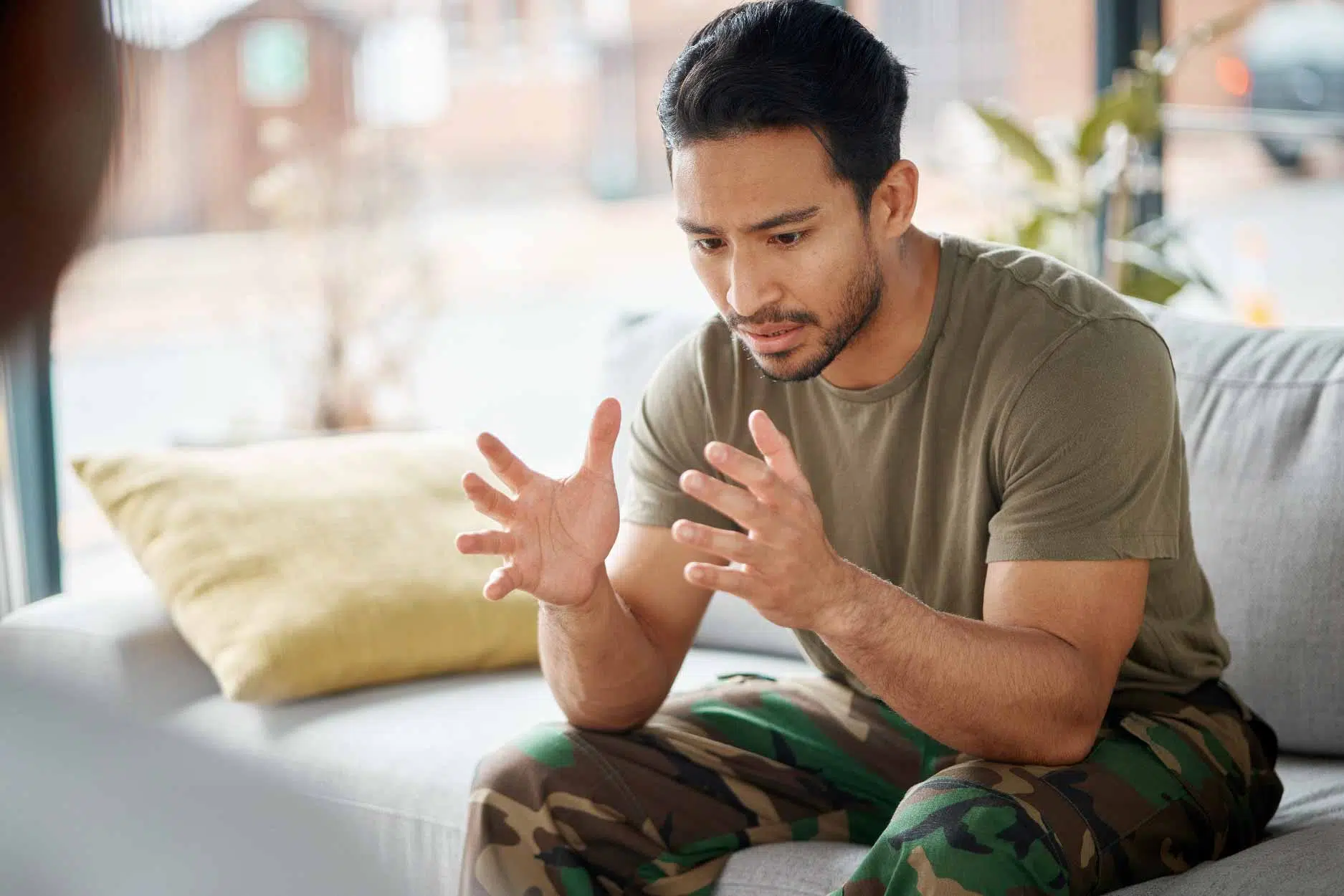
Coming home is supposed to feel like relief.
But for many veterans, it doesn’t happen that way. You return home, unpack your bags, reconnect with family, and try to settle back into normal life—yet something still feels off. Your body stays tense. Sleep doesn’t come easily. Loud noises make your heart race before your brain has time to catch up.
Sometimes it’s hard to explain to the people around you. On the outside, you may look fine. Inside, though, it can feel like your nervous system never got the message that you made it home safely.
At Renewal House, we work with veterans who spent months or years trying to manage these feelings alone before exploring our veterans program. Many of them worried they were overreacting. Others thought they should simply “be tougher.”
The truth is, struggling after deployment is more common than many people realize. And reaching out for support doesn’t mean you failed. It may mean you’ve been carrying too much for too long.
Your Body May Still Be Living in Survival Mode
Military training teaches you how to stay alert, respond quickly, and protect yourself and others under pressure. Those instincts matter. They serve a purpose during deployment.
The problem is that sometimes the body doesn’t fully power down afterward.
You might notice yourself reacting strongly to fireworks, traffic, crowded stores, or sudden sounds. Even small situations can trigger a rush of adrenaline. Some veterans say they feel exhausted by the end of the day without understanding why. Hypervigilance takes energy. Living in a constant state of alertness can slowly drain both the mind and body.
People searching for answers about PTSD symptoms after deployment are often trying to understand why they still feel unsafe even after coming home.
That confusion can feel isolating. Especially if everyone around you assumes you should be “back to normal” by now.
The Signs Aren’t Always Dramatic
Many veterans imagine that trauma only counts if someone is having severe flashbacks or visible breakdowns. In reality, emotional struggles after deployment often show up in quieter ways first.
You may become more withdrawn. Conversations feel harder. Sleep becomes lighter and more interrupted. You snap at people faster than you used to. Small frustrations suddenly feel overwhelming.
Some people throw themselves into work to avoid thinking. Others isolate because being around people feels exhausting. A few start using alcohol or other substances to calm their nervous system enough to relax.
Sometimes the warning signs look less like a crisis and more like slowly disappearing from your own life.
Signs it may be time to seek support:
- You feel constantly tense or on edge
- Loud sounds trigger strong physical reactions
- You avoid crowds or public places
- Sleep feels difficult or restless
- You feel emotionally numb or disconnected
- Anger feels harder to control
- You’ve started isolating from loved ones
- You rely heavily on alcohol or substances to cope
- You don’t feel like yourself anymore
None of these signs make you weak. They make you human.
A nervous system under prolonged stress adapts to survive. Sometimes healing means helping it learn safety again.
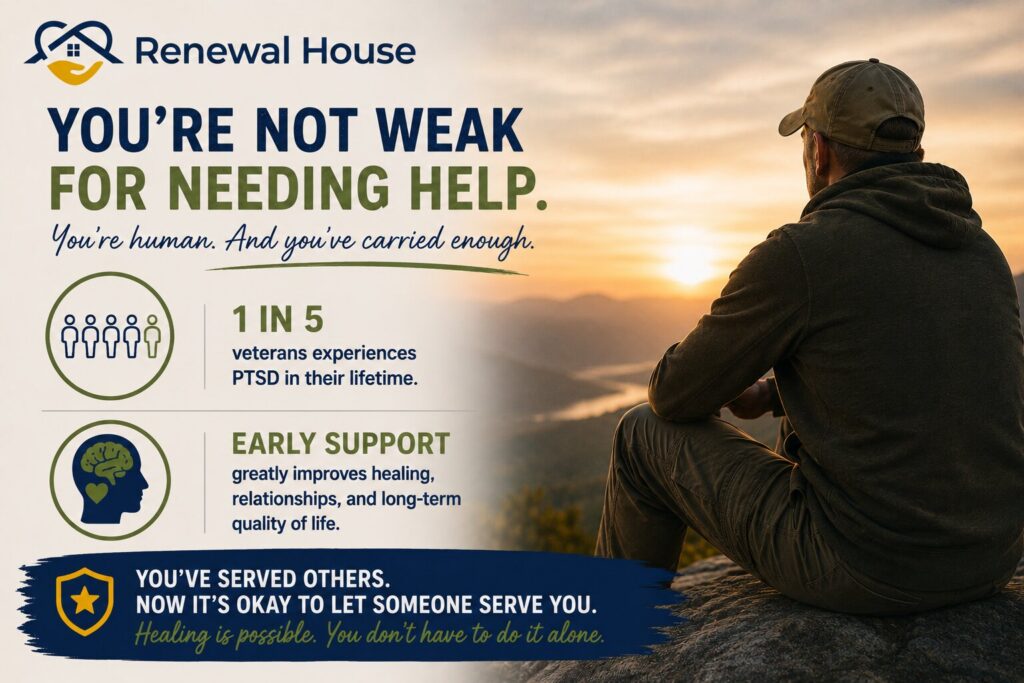
You Don’t Need to Hit Rock Bottom
One reason many veterans avoid treatment is because they believe their pain “isn’t bad enough.”
Someone else had a worse deployment. Someone else saw more combat. Someone else is struggling more openly.
But suffering is not a contest.
We’ve worked with veterans who waited years before reaching out because they thought asking for help would somehow take away from someone else’s experience. In reality, emotional pain deserves attention long before it becomes a full crisis.
You do not have to wait until your relationships fall apart.
You do not have to lose your job.
You do not have to reach a breaking point before you deserve support.
Sometimes the strongest thing a person can do is recognize they’re tired of carrying everything alone.
It’s Common to Feel Guilty About Needing Help
Many veterans carry guilt that others around them cannot fully see.
Some feel guilty for surviving when others did not. Some feel guilty for struggling when their family expects them to be grateful just to be home. Others feel guilty because they believe asking for help means they’re failing somehow.
That weight can keep people silent for years.
But trauma doesn’t disappear simply because you ignore it. In many cases, untreated stress slowly grows louder over time. It can affect relationships, parenting, physical health, work performance, and overall quality of life.
A lot of veterans become experts at functioning while suffering quietly.
From the outside, they may appear successful and capable. Inside, though, they feel exhausted trying to keep everything together.
Support Should Feel Safe, Not Punishing
For some veterans, the idea of treatment feels intimidating because they imagine being judged, pressured, or forced into uncomfortable conversations before they’re ready.
That fear is understandable.
Good care should not feel like punishment. It should feel like support.
At Renewal House, we understand that trust matters. Veterans often carry experiences that are difficult to explain to people who have never lived through military service or trauma firsthand. Healing starts with feeling respected—not analyzed.
Sometimes the first step is simply having a conversation.
Not every person who reaches out knows exactly what they need right away. That’s okay. You do not need to have everything figured out before asking questions or exploring options.
Whether someone is seeking support in Charleston or looking for care elsewhere in West Virginia, what matters most is finding a place where they feel understood and safe enough to begin.
Trauma Can Affect the People You Love Too
Many veterans try to protect their families by staying silent about what they’re feeling.
But emotional pain rarely stays contained.
Partners may notice emotional distance. Children may sense tension even if they don’t understand it. Friends may stop reaching out after repeated cancellations or withdrawal.
This doesn’t mean you’re failing the people you love. It means stress and trauma can ripple outward in ways that are hard to control alone.
The good news is that healing can ripple outward too.
As veterans begin receiving support, many people notice improvements in communication, patience, sleep, and emotional connection. Small changes can rebuild trust and stability over time.
Sometimes healing begins with one honest sentence:
“I don’t think I’m doing as okay as I thought I was.”
You’re Allowed to Want Peace Again
There’s a common belief among veterans that struggle is simply something you learn to live with forever.
And while some experiences leave lasting marks, life does not have to stay stuck in survival mode.
Healing doesn’t mean forgetting what happened. It doesn’t erase your experiences or change who you are. In many cases, it simply means your body and mind no longer have to carry the same level of constant tension every day.
A lot of veterans describe treatment as the first place they felt understood without needing to overexplain themselves.
Others describe it as finally being able to exhale.
That kind of peace matters.
And you deserve the chance to experience it.
Whether you’re exploring care in the Eastern Panhandle of West Virginia or simply beginning to wonder if you need support, it’s okay to ask questions before you feel completely ready.
FAQ About Seeking Help After Deployment
Is it normal to feel jumpy after deployment?
Yes. Many veterans experience heightened alertness, anxiety, or strong reactions to loud noises after deployment. For some people, these feelings improve with time. For others, they continue interfering with daily life and may benefit from professional support.
How do I know if I need a veterans program?
If stress, anxiety, sleep problems, emotional numbness, isolation, or hypervigilance are affecting your daily life, relationships, or sense of well-being, it may help to speak with a professional. You do not need to be in crisis to reach out.
What if I’m not ready to talk about everything?
That’s okay. Many veterans worry treatment will force them to share painful memories immediately. In reality, good care moves at a pace that feels safe and respectful. Building trust often comes first.
Can untreated trauma get worse over time?
It can. Some veterans notice symptoms becoming more intense months or years after deployment, especially during stressful life events. Seeking support early may help prevent things from escalating further.
Does asking for help mean I’m weak?
No. Reaching out for support takes honesty and courage. Many veterans spend years trying to manage things alone before realizing they deserve help too.
What kinds of issues can veterans programs help with?
Veterans programs may support people dealing with trauma, anxiety, depression, sleep issues, substance use, emotional disconnection, anger, and difficulties adjusting after military service.
What if I’ve tried treatment before?
Past experiences do not define what healing looks like moving forward. Different programs, approaches, and environments can feel very different. Some veterans find the right fit after trying more than once.
You Don’t Have to Carry This Alone
If you’ve been feeling stuck between “I’m fine” and “I can’t keep doing this,” that space matters too.
You deserve support before things reach a crisis point. You deserve a place where you can feel understood, respected, and safe enough to begin healing at your own pace.
Call (304) 601-2279 or visit our veterans program services in Comfort, West Virginia to learn more about taking the next step.
