

Many people enter recovery believing that once they stop using their primary substance, the hardest part is behind them.
Then something unexpected happens.
The alcohol is gone, but shopping becomes compulsive.
Prescription pills are no longer part of daily life, but gambling starts to feel impossible to control.
Someone who quit opioids begins drinking heavily every evening.
For many people, this creates overwhelming guilt.
“I thought I was getting better. Why am I struggling with something else now?”
The truth is that this experience is more common than many people realize. It does not automatically mean treatment failed or that someone lacks willpower. In many cases, it reflects how the brain responds to addiction and reward.
At Renewal House, we understand that lasting recovery involves treating more than one substance. Comprehensive drug addiction treatment helps people recognize unhealthy patterns, address the underlying causes of addiction, and build healthier coping strategies that reduce the risk of simply replacing one addiction with another.
What Cross Addiction Is
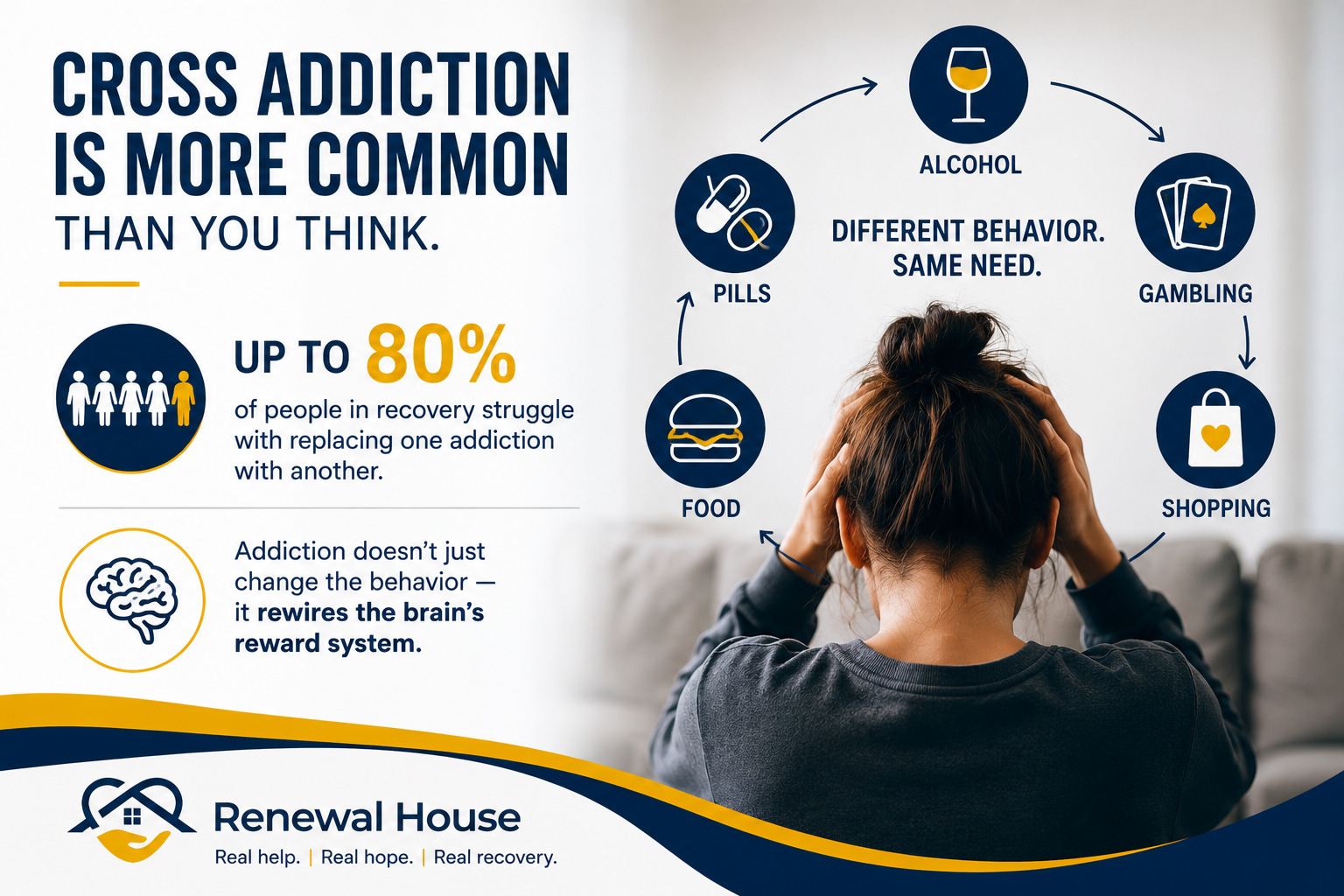
Cross addiction refers to a pattern in which someone who stops using one addictive substance or behavior develops another addiction in its place.
Instead of eliminating the need to seek reward or escape emotional discomfort, the addiction shifts toward something different.
The substitute may involve:
- Alcohol
- Prescription medications
- Illicit drugs
- Gambling
- Shopping
- Food
- Exercise
- Sex or pornography
- Video gaming
- Social media
Although the specific behavior changes, the underlying cycle often remains the same.
The individual continues relying on an outside source to regulate emotions, reduce stress, or experience relief.
This is why recovery involves much more than simply removing one substance.
Why It Does Not Mean You Failed
Many people experiencing cross addiction believe they have somehow ruined their recovery.
That belief often prevents them from asking for help.
The reality is different.
Addiction affects brain circuits involved in reward, motivation, stress, and decision-making. Those changes do not disappear immediately after someone stops using one substance.
Without learning healthier coping strategies, the brain may continue searching for another activity capable of producing similar feelings of relief or pleasure.
Recognizing this pattern early allows treatment providers to intervene before another addiction becomes firmly established.
Common Examples of Cross Addiction
Cross addiction can develop in many different ways.
Some of the most common examples include:
Alcohol to Prescription Drugs
Someone who stops drinking may begin misusing benzodiazepines or pain medications because they produce similar calming effects.
Opioids to Alcohol
Individuals recovering from opioid addiction sometimes begin drinking heavily, believing alcohol is less dangerous because it is legal.
Unfortunately, alcohol misuse can become just as disruptive.
Drug Use to Gambling
After eliminating drugs, some individuals discover that gambling provides the same excitement and emotional escape they previously found through substance use.
Over time, gambling losses can create financial and emotional crises.
Nicotine Replacement
Many people smoke more heavily during early recovery.
While nicotine dependence is different from substance use disorders, replacing one addictive behavior with another can sometimes delay broader recovery goals.
Food and Sugar
Some individuals notice increased cravings for sugary foods or overeating after stopping alcohol or drugs.
Although enjoying food is not inherently unhealthy, using eating as the primary coping strategy for emotional distress may become problematic over time.
Compulsive Shopping
Buying new items can temporarily increase dopamine activity in the brain.
For someone vulnerable to addiction, shopping may become another way to chase temporary relief.
Why the Brain Does It
One reason cross addiction occurs is that many addictive substances and behaviors affect the same mesolimbic reward pathway, often called the brain’s reward system.
Whenever someone experiences something pleasurable, the brain releases dopamine.
Dopamine helps reinforce behaviors the brain views as rewarding.
Alcohol, opioids, stimulants, gambling, shopping, and several other behaviors all stimulate this reward system to varying degrees.
Over time, repeated stimulation changes how the brain responds.
Instead of naturally regulating pleasure and motivation, the brain begins expecting unusually large dopamine surges.
When one addictive substance disappears, the underlying changes within the reward pathway may still remain.
As a result, the brain may begin searching for another source capable of producing similar feelings.
This neurological process helps explain why addiction sometimes shifts rather than disappears.
Emotional Triggers Also Play a Role
Brain chemistry is only part of the picture.
Many addictive behaviors serve emotional purposes.
People may use substances or behaviors to:
- Reduce anxiety
- Escape painful memories
- Manage loneliness
- Cope with depression
- Relieve boredom
- Handle overwhelming stress
If these emotional needs remain untreated, another addiction may emerge to fill the same role.
This is why comprehensive recovery addresses emotional health alongside substance use.
Warning Signs of Cross Addiction in Recovery
Recognizing the early warning signs can prevent a new addiction from becoming deeply established.
Potential warning signs include:
- Becoming preoccupied with another substance or behavior
- Feeling unable to control the new habit
- Spending increasing amounts of time engaging in the behavior
- Hiding the behavior from loved ones
- Using the behavior to manage difficult emotions
- Experiencing financial, legal, or relationship problems
- Feeling guilty afterward but continuing anyway
- Losing interest in healthy recovery activities
Many people dismiss these signs because the new behavior seems less harmful than the original addiction.
However, the underlying cycle may be very similar.
Why Cross Addiction Can Be Difficult to Recognize
One reason cross addiction often goes unnoticed is that the substitute may appear socially acceptable.
Examples include:
- Working excessive hours
- Exercising compulsively
- Online shopping
- Constant gaming
- Frequent sports betting
- Heavy caffeine consumption
Friends and family may even praise some of these behaviors initially.
Over time, however, they may begin interfering with relationships, finances, employment, or emotional health.
Recovery is not simply about avoiding illegal drugs.
It is about developing a healthier relationship with reward, stress, and emotional regulation.
How Integrated Treatment Addresses Cross Addiction
Effective addiction treatment focuses on more than stopping substance use.
It helps individuals understand why addictive patterns developed in the first place.
Integrated treatment often includes:
Individual Therapy
Therapists help identify emotional triggers, trauma, stressors, and unhealthy thought patterns that contribute to addictive behaviors.
Group Therapy
Hearing others describe similar experiences often reduces shame while building accountability and support.
Relapse Prevention Planning
Patients learn practical strategies for recognizing early warning signs before addictive behaviors escalate.
Mental Health Treatment
Many individuals living with addiction also experience anxiety, depression, PTSD, or other mental health conditions.
Treating both conditions together often improves long-term recovery outcomes.
Healthy Coping Skills
Recovery involves replacing unhealthy coping mechanisms with healthier alternatives such as:
- Exercise in moderation
- Mindfulness
- Problem-solving skills
- Communication skills
- Stress management
- Building supportive relationships
Rather than removing one behavior and hoping another does not appear, integrated care teaches people how to meet emotional needs in healthier ways.
Recovery Is About Healing the Whole Person
Many individuals believe recovery means simply avoiding alcohol or drugs forever.
In reality, long-term recovery often involves much deeper work.
Healing includes:
- Learning emotional regulation
- Building resilience
- Managing stress without substances
- Repairing relationships
- Creating purpose
- Developing healthy routines
When these areas improve, the need to replace one addiction with another often becomes much smaller.
Recovery becomes less about constantly resisting temptation and more about building a fulfilling life that no longer revolves around addictive behaviors.
Final Thoughts
Experiencing cross addiction does not mean you have failed or that recovery is impossible.
It is a recognized pattern that reflects how addiction affects the brain’s reward system—not a lack of character or determination. Recognizing the signs early allows you to address the underlying causes before another addiction takes hold.
At Renewal House, we provide compassionate, evidence-based treatment that looks beyond a single substance and focuses on the whole person. By addressing addiction, mental health, and long-term coping strategies together, we help individuals build a stronger foundation for lasting recovery.
If you or someone you love is concerned about replacing one addiction with another, call 304.601.2279 to learn more about your treatment options in Charleston, Eastern Panhandle, Huntington & Barboursville.
Frequently Asked Questions
What is cross addiction?
Cross addiction is a pattern in which a person stops using one addictive substance or behavior but develops another in its place. The new addiction may involve alcohol, drugs, gambling, shopping, food, or other behaviors that activate the brain’s reward system.
Why does cross addiction happen?
Cross addiction occurs because many substances and behaviors affect similar reward pathways in the brain. Emotional factors such as stress, anxiety, trauma, or depression can also contribute if healthier coping strategies have not yet been developed.
How do you prevent cross addiction in recovery?
Preventing cross addiction involves more than avoiding one substance. Ongoing therapy, relapse prevention planning, treatment for co-occurring mental health conditions, healthy coping skills, and a strong support network all help reduce the risk of replacing one addiction with another.
Is cross addiction common?
Yes. While not everyone experiences it, cross addiction is a well-recognized phenomenon in addiction medicine. It can affect people recovering from alcohol, opioids, stimulants, prescription medications, and behavioral addictions.
Can behavioral addictions replace substance use?
Yes. Some people replace substance use with behaviors such as gambling, compulsive shopping, excessive gaming, overeating, or other activities that temporarily activate the brain’s reward system. Professional treatment can help identify and address these patterns early.
Does developing another addiction mean treatment didn’t work?
No. Developing another addictive behavior does not mean recovery has failed. It often signals that additional support is needed to address the underlying emotional and neurological factors contributing to addiction. With comprehensive treatment, many people successfully overcome these patterns and continue building long-term recovery.
