

Many people expect benzodiazepines to affect the brain.
They know these medications can reduce anxiety, cause drowsiness, and slow the nervous system.
What often surprises people is what happens to their stomach.
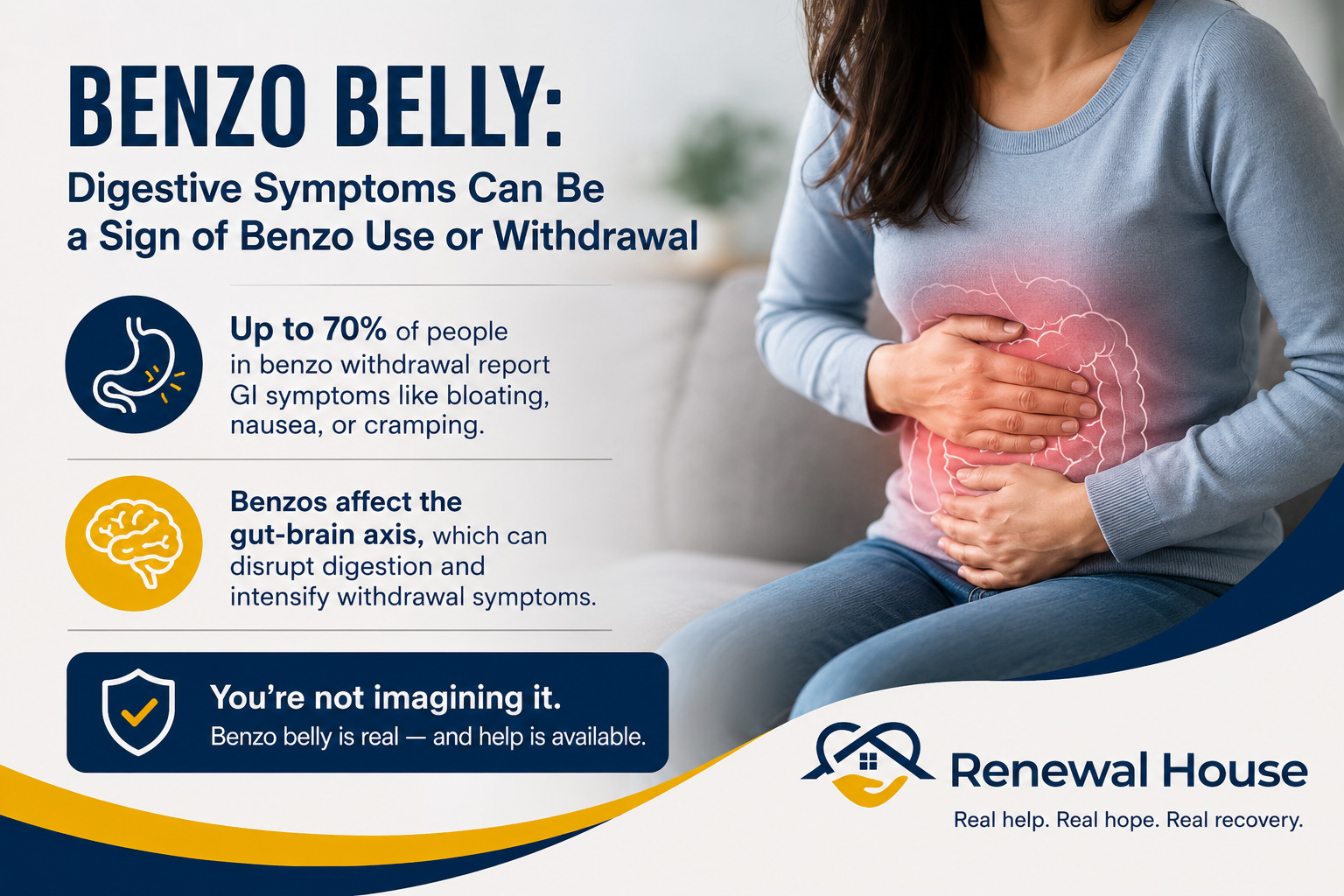
Persistent bloating, nausea, stomach cramps, constipation, diarrhea, or a general feeling that digestion has become unpredictable are symptoms many people describe during long-term benzodiazepine use or after reducing their dose. Online recovery communities often refer to this group of symptoms as benzo belly.
Although “benzo belly” is not an official medical diagnosis, the digestive symptoms it describes are very real. They can occur during benzodiazepine use, become more noticeable during withdrawal, and sometimes continue for weeks while the body adjusts.
At Renewal House, we help individuals safely recover from benzodiazepine dependence through comprehensive benzodiazepine addiction treatment. Understanding why digestive symptoms occur can help you recognize when it may be time to seek professional support rather than trying to manage withdrawal alone.
What “Benzo Belly” Is
Benzo belly is an informal term used to describe gastrointestinal (GI) symptoms that may occur during benzodiazepine use, dose reduction, or withdrawal.
People commonly report:
- Bloating
- Abdominal discomfort
- Stomach cramps
- Nausea
- Constipation
- Diarrhea
- Indigestion
- Excessive gas
- Feeling unusually full after eating
- Changes in appetite
For some individuals, these symptoms are mild and temporary.
For others, digestive problems become one of the most frustrating parts of withdrawal because they can interfere with eating, sleeping, and daily activities.
Although digestive symptoms alone do not confirm benzodiazepine dependence, they are common enough that many healthcare professionals recognize them as part of the withdrawal experience.
Why Benzos Affect the Digestive System
The digestive system and the brain are closely connected.
This connection is often called the gut-brain axis.
Benzodiazepines increase the activity of gamma-aminobutyric acid (GABA), an inhibitory neurotransmitter that slows activity throughout the central nervous system.
Because the nervous system also helps regulate digestion, changes in GABA signaling may influence how the gastrointestinal tract functions.
Researchers believe several mechanisms contribute to digestive symptoms.
Changes in the Gut-Brain Axis
The brain and digestive tract communicate constantly through nerves, hormones, and chemical messengers.
When benzodiazepines alter brain activity, digestive function may also change.
Effects on the Autonomic Nervous System
The autonomic nervous system regulates many automatic body functions, including digestion.
During withdrawal, increased nervous system activity may temporarily disrupt normal bowel function.
Stress During Withdrawal
Anxiety commonly increases during benzodiazepine withdrawal.
Stress itself can worsen digestive symptoms by affecting stomach acid production, intestinal movement, and sensitivity within the digestive tract.
Together, these factors help explain why digestive discomfort can become so noticeable during withdrawal.
Benzo Belly as a Side Effect vs. a Withdrawal Symptom
Not all digestive problems occur for the same reason.
During Active Benzodiazepine Use
Some people experience gastrointestinal side effects while taking benzodiazepines exactly as prescribed.
These may include:
- Mild nausea
- Constipation
- Reduced appetite
- Occasional stomach discomfort
These symptoms are generally related to the medication itself.
During Withdrawal
Digestive symptoms often become more pronounced when someone:
- Stops taking benzodiazepines suddenly
- Reduces the dose rapidly
- Misses several doses
- Begins tapering after long-term use
Withdrawal-related symptoms may include:
- Severe bloating
- Cramping
- Alternating constipation and diarrhea
- Loss of appetite
- Nausea
- Increased abdominal discomfort
Withdrawal affects much more than the digestive system.
Many individuals also experience:
- Anxiety
- Panic attacks
- Insomnia
- Tremors
- Sweating
- Muscle tension
- Difficulty concentrating
The combination of physical and emotional symptoms can make withdrawal particularly challenging without medical support.
Why Benzo Withdrawal Can Be Dangerous
Some people assume digestive symptoms simply mean they should “wait it out.”
However, gastrointestinal discomfort may occur alongside more serious withdrawal complications.
Abruptly stopping benzodiazepines after regular or long-term use can increase the risk of:
- Severe anxiety
- Panic attacks
- Elevated heart rate
- Hallucinations
- Seizures
Because withdrawal severity varies widely between individuals, healthcare providers generally recommend medical supervision before discontinuing benzodiazepines.
Stopping “cold turkey” can be dangerous, particularly for individuals who have taken these medications regularly.
How Long Benzo Belly Lasts
There is no single timeline.
Recovery depends on several factors, including:
- Which benzodiazepine was used
- Daily dosage
- Length of use
- Individual metabolism
- Overall health
- Whether withdrawal occurred gradually or abruptly
For some individuals, digestive symptoms begin improving within days.
Others continue experiencing intermittent bloating or stomach discomfort for several weeks.
People recovering from long-term benzodiazepine dependence may notice gradual improvement as the nervous system continues stabilizing over time.
Because everyone’s recovery is different, comparing your experience to someone else’s can create unnecessary anxiety.
When GI Symptoms May Signal Benzo Dependence
Occasional stomach upset has many possible causes.
However, digestive symptoms deserve closer attention when they occur alongside other warning signs of benzodiazepine dependence.
These may include:
- Needing higher doses for the same effect
- Feeling anxious between doses
- Running out of medication early
- Difficulty reducing use
- Cravings for the medication
- Withdrawal symptoms after missing doses
- Continuing use despite negative consequences
If digestive symptoms consistently appear whenever medication levels decrease, it may indicate the body has developed physical dependence.
A professional evaluation can help determine whether benzodiazepines are contributing to these symptoms.
When to Seek Medical Help
Digestive symptoms should never be ignored if they occur alongside signs of severe withdrawal.
Seek immediate medical attention if gastrointestinal symptoms occur together with:
- Seizures
- Hallucinations
- Severe confusion
- Loss of consciousness
- Difficulty breathing
- Persistent vomiting leading to dehydration
- Chest pain
Even if symptoms seem less severe, it is still wise to speak with a healthcare professional before attempting to stop benzodiazepines.
Medical supervision helps reduce withdrawal risks while providing support throughout recovery.
How Comprehensive Treatment Supports Recovery
Recovery involves much more than simply stopping medication.
Comprehensive care helps individuals safely manage withdrawal while addressing the underlying reasons benzodiazepines were prescribed in the first place.
Treatment often includes:
Medical Evaluation
Healthcare professionals assess withdrawal risk and develop an individualized treatment plan.
Supervised Withdrawal
Gradual tapering or medically supervised care may reduce withdrawal complications for appropriate patients.
Therapy
Counseling helps individuals develop healthier strategies for managing anxiety, panic disorders, trauma, or insomnia.
Relapse Prevention
Patients learn practical coping skills that support long-term recovery while reducing the likelihood of returning to benzodiazepine use.
Treating both the physical and emotional aspects of dependence gives individuals a stronger foundation for lasting recovery.
Recovery Is Possible
Many people experiencing digestive symptoms during benzodiazepine withdrawal worry something is permanently wrong.
Fortunately, the nervous system often improves over time with appropriate medical care and ongoing recovery support.
Seeking help early may reduce complications while making the recovery process safer and more manageable.
For individuals throughout West Virginia, professional treatment offers compassionate support for both withdrawal symptoms and the underlying challenges that contributed to benzodiazepine dependence.
Final Thoughts
Experiencing benzo belly can be confusing and discouraging, especially if you did not realize digestive symptoms could be connected to benzodiazepine use or withdrawal.
While bloating, nausea, cramping, and other gastrointestinal problems are commonly reported during recovery, they should never be a reason to stop benzodiazepines abruptly. Withdrawal can become dangerous and, in some cases, lead to serious complications such as seizures.
At Renewal House, we provide evidence-based care that helps individuals safely recover from benzodiazepine dependence while addressing both the physical and emotional aspects of addiction.
If you or someone you love is concerned about benzodiazepine dependence or withdrawal, call 304.601.2279 to learn more about your treatment options in Charleston, Eastern Panhandle, Huntington & Barboursville.
Frequently Asked Questions
What is benzo belly?
Benzo belly is an informal term used to describe gastrointestinal symptoms such as bloating, nausea, stomach cramps, constipation, diarrhea, and indigestion that may occur during benzodiazepine use or withdrawal. Although it is not an official medical diagnosis, the symptoms are commonly reported during recovery.
Is benzo belly a withdrawal symptom?
Yes. While some digestive symptoms can occur as medication side effects, benzo belly is most commonly associated with benzodiazepine withdrawal. It may develop as the nervous system adjusts to reduced medication levels.
How long does benzo belly last?
The duration varies from person to person. Some individuals improve within several days, while others experience digestive symptoms for several weeks. Factors such as dosage, length of use, overall health, and the withdrawal approach all influence recovery time.
Can benzo belly happen while still taking benzodiazepines?
Yes. Some people experience nausea, constipation, or other digestive symptoms while taking benzodiazepines as prescribed. However, symptoms often become more noticeable during dose reduction or withdrawal.
Should I stop taking benzodiazepines if I have benzo belly?
No. Do not stop benzodiazepines suddenly without medical guidance. Abrupt discontinuation can lead to serious withdrawal complications, including seizures. Speak with a healthcare professional to determine the safest treatment plan.
Can anxiety make benzo belly worse?
Yes. Anxiety and stress can significantly affect the digestive system through the gut-brain axis. During benzodiazepine withdrawal, increased anxiety may contribute to bloating, cramping, nausea, and other gastrointestinal symptoms.
