

Many people know that alcohol withdrawal can cause shaking, sweating, nausea, and anxiety.
Fewer people realize that it can also cause hallucinations.
Hearing voices, sounds that are not there, or seeing things others cannot see can be terrifying. When these symptoms appear, many people immediately assume they are experiencing delirium tremens (DTs).
That is not always the case.
One possible explanation is alcoholic hallucinosis, a condition that can occur during or shortly after heavy alcohol use or withdrawal. While it is different from delirium tremens, it should never be ignored. Hallucinations during alcohol withdrawal always require prompt medical evaluation because they can signal serious complications or progress to more severe withdrawal.
At Renewal House, we provide medical alcohol detox for individuals experiencing alcohol withdrawal. Understanding the difference between alcoholic hallucinosis and DTs can help you recognize when professional care is needed.
What Alcoholic Hallucinosis Is
Alcoholic hallucinosis is a complication associated with heavy, long-term alcohol use in which a person experiences hallucinations while remaining awake, alert, and generally aware of their surroundings.
Unlike delirium tremens, individuals with alcoholic hallucinosis often know where they are, recognize family members, and can carry on conversations despite experiencing frightening hallucinations.
The hallucinations are most commonly:
- Hearing voices
- Hearing music or sounds that are not present
- Occasionally seeing people, animals, or objects that are not there
- Less commonly experiencing unusual sensations such as feeling something crawling on the skin
Auditory hallucinations—particularly hearing voices—are the hallmark feature of alcoholic hallucinosis.
For many individuals, the voices may sound threatening, critical, or frightening, which can significantly increase anxiety and emotional distress.
When Does Alcoholic Hallucinosis Occur?
Symptoms often develop:
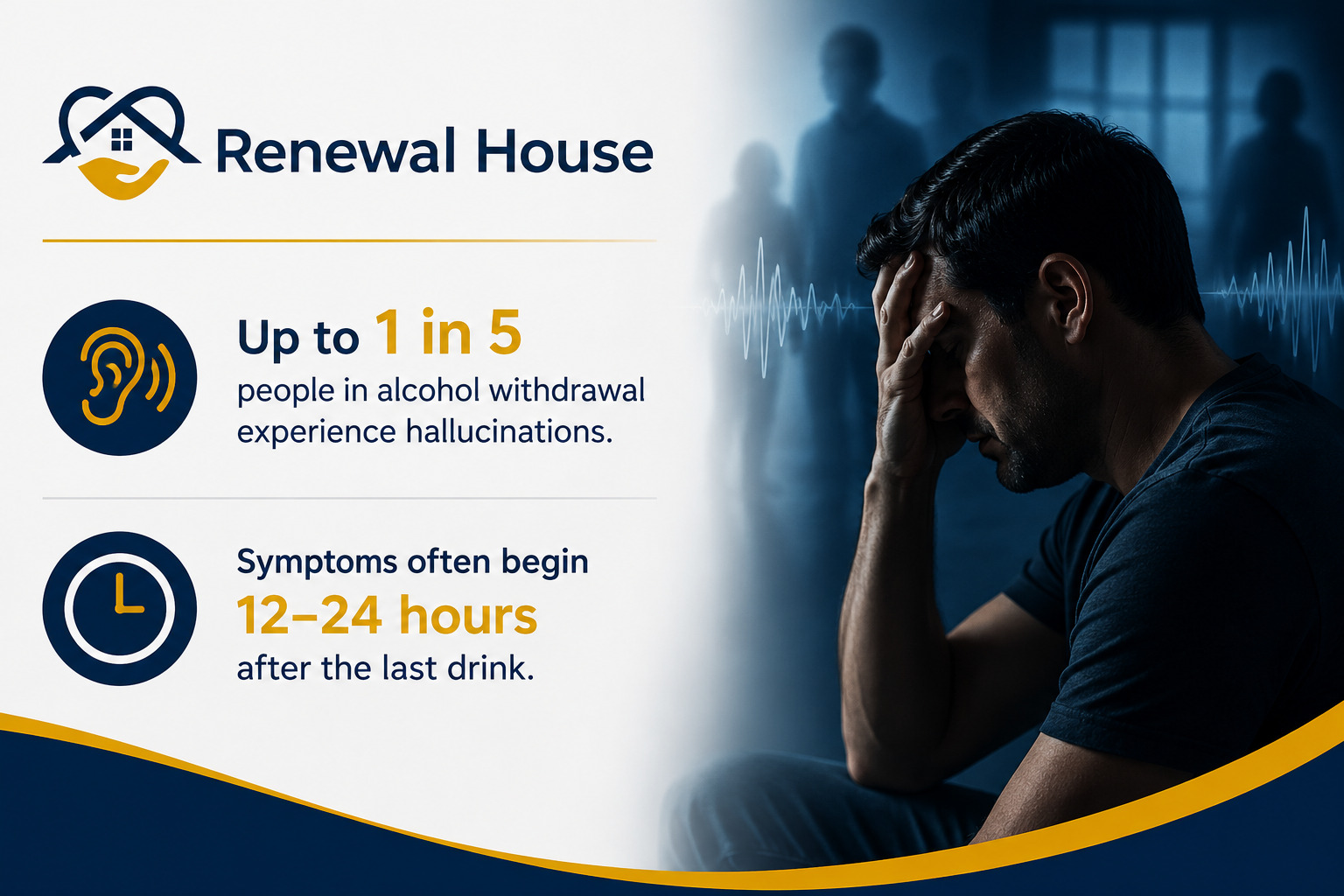
- Within 12 to 24 hours after reducing or stopping heavy alcohol use
- During early alcohol withdrawal
- Occasionally while heavy drinking is still ongoing
Not everyone who experiences alcohol withdrawal develops hallucinations.
However, individuals with a long history of heavy drinking or repeated withdrawal episodes may have a higher risk of experiencing more complicated withdrawal symptoms.
Symptoms of Alcoholic Hallucinosis
Symptoms may include:
- Hearing voices that are not present
- Hearing knocking, ringing, buzzing, or music
- Visual hallucinations
- Intense fear or anxiety
- Difficulty sleeping
- Restlessness
- Increased heart rate
- Sweating
- Tremors related to alcohol withdrawal
Importantly, many individuals remain oriented to:
- Time
- Place
- Their identity
- The people around them
That preserved awareness is one of the major features that helps distinguish alcoholic hallucinosis from delirium tremens.
How Alcoholic Hallucinosis Differs from Delirium Tremens (DTs)
Because both conditions involve hallucinations, they are often confused.
Although they can overlap, they are not the same medical condition.
| Alcoholic Hallucinosis | Delirium Tremens (DTs) |
|---|---|
| Person usually remains alert and oriented | Severe confusion and disorientation |
| Hallucinations are often primarily auditory | Hallucinations plus severe mental status changes |
| Usually develops earlier in withdrawal | Typically develops 48–72 hours after the last drink, though timing varies |
| Person generally understands where they are | Person may not recognize surroundings or family |
| Serious medical evaluation still required | Medical emergency requiring immediate treatment |
One important point cannot be overstated:
Any hallucinations related to alcohol withdrawal require prompt medical assessment.
Only trained medical professionals can determine whether someone is experiencing alcoholic hallucinosis, progressing toward delirium tremens, or developing another potentially dangerous medical condition.
Why Alcoholic Hallucinosis Happens
Researchers continue studying the exact mechanisms behind alcoholic hallucinosis, but the condition is believed to result from significant changes in brain chemistry caused by prolonged alcohol exposure.
Alcohol suppresses activity within the central nervous system.
Over time, the brain compensates by increasing excitatory activity to maintain balance.
When alcohol is suddenly removed, the brain may become temporarily overactive.
This overactivity contributes to many withdrawal symptoms, including:
- Anxiety
- Tremors
- Sweating
- Elevated blood pressure
- Increased heart rate
- Hallucinations
The longer and heavier someone drinks, the greater the likelihood that the brain has adapted to alcohol’s constant presence.
This is one reason withdrawal can become progressively more severe after repeated episodes.
Risk Factors for Alcoholic Hallucinosis
Several factors may increase the likelihood of developing hallucinations during withdrawal, including:
- Long-term heavy alcohol use
- Daily drinking over many years
- Previous episodes of alcohol withdrawal
- Prior withdrawal complications
- Co-occurring medical or mental health conditions
- Poor nutrition associated with chronic alcohol misuse
While these factors increase risk, alcoholic hallucinosis can still occur unexpectedly.
That is why anyone experiencing hallucinations after reducing or stopping alcohol should seek immediate medical evaluation.
When Alcoholic Hallucinosis Becomes a Medical Emergency
Even though alcoholic hallucinosis differs from delirium tremens, it should never be managed at home without medical guidance.
Seek immediate medical attention if hallucinations occur alongside:
- Confusion or disorientation
- Fever
- Seizures
- Loss of consciousness
- Severe agitation
- Difficulty breathing
- Chest pain
- Uncontrolled vomiting
- Rapid worsening of symptoms
Even if someone remains alert, hallucinations themselves warrant prompt evaluation because withdrawal symptoms can evolve rapidly.
Medical professionals can monitor for complications and intervene before symptoms become life-threatening.
Why Hallucinations During Withdrawal Should Never Be Ignored
Some people try to “push through” withdrawal because they believe the worst symptoms will eventually pass.
Unfortunately, alcohol withdrawal is unpredictable.
A person who initially experiences only mild shaking and anxiety can later develop more serious complications.
Hallucinations indicate that the nervous system is under significant stress.
Even if the hallucinations eventually improve, they should not be viewed as something that can safely be ignored.
Early medical care may reduce the risk of progression to more severe withdrawal complications.
Why Medically Supervised Alcohol Detox Matters
Professional detox provides a level of safety that cannot be replicated at home.
Medical teams can:
- Monitor withdrawal symptoms around the clock
- Check blood pressure, heart rate, and oxygen levels
- Administer medications when clinically appropriate
- Reduce the risk of severe withdrawal complications
- Respond quickly if symptoms worsen
- Begin planning for ongoing addiction treatment after detox
For many individuals, detox is not simply about becoming alcohol-free.
It is about doing so as safely as possible.
Recovery Is Possible
Experiencing hallucinations during alcohol withdrawal can be frightening for both the individual and their loved ones.
Fortunately, recovery is possible.
Alcohol Addiction Treatment allows withdrawal symptoms to be carefully monitored while helping patients transition into ongoing treatment that addresses the underlying alcohol use disorder—not just the immediate physical symptoms.
For residents of Charleston, Eastern Panhandle, Huntington & Barboursville, professional medical care offers a much safer alternative than attempting withdrawal alone.
Final Thoughts
If you or someone you love is experiencing alcoholic hallucinosis or any hallucinations after reducing or stopping alcohol use, it is important to seek medical evaluation immediately.
While alcoholic hallucinosis differs from delirium tremens because people often remain alert and aware of their surroundings, both conditions require professional assessment. Hallucinations during alcohol withdrawal should never be ignored or treated at home without medical guidance.
At Renewal House, our experienced medical team provides compassionate, medically supervised care designed to help individuals withdraw from alcohol as safely as possible and begin the next stage of recovery. To learn more about treatment options or speak with our admissions team, call 304.601.2279 today.
Frequently Asked Questions
Is alcoholic hallucinosis the same as DTs?
No. Alcoholic hallucinosis and delirium tremens (DTs) are different conditions. People with alcoholic hallucinosis often remain alert and oriented despite experiencing hallucinations, while DTs involve severe confusion, disorientation, and widespread changes in mental status. Both require immediate medical evaluation.
Is alcoholic hallucinosis dangerous?
Yes. Although it is distinct from delirium tremens, alcoholic hallucinosis can indicate significant alcohol withdrawal and should never be ignored. Hallucinations during withdrawal require prompt medical assessment because symptoms can worsen quickly.
How long does alcoholic hallucinosis last?
The duration varies depending on the individual and the severity of withdrawal. Symptoms often begin within the first day after reducing or stopping alcohol and may last from several hours to several days. Medical evaluation is recommended regardless of symptom duration.
Can alcoholic hallucinosis happen without delirium tremens?
Yes. Some individuals develop alcoholic hallucinosis without progressing to delirium tremens. However, only healthcare professionals can determine whether someone is experiencing alcoholic hallucinosis, DTs, or another medical condition.
What causes hallucinations during alcohol withdrawal?
Long-term alcohol use changes the way the brain functions. When alcohol is suddenly removed, the nervous system can become overactive, contributing to withdrawal symptoms such as anxiety, tremors, sweating, and, in some cases, hallucinations.
Should someone experiencing hallucinations during alcohol withdrawal go to the emergency room?
Yes. Hallucinations during alcohol withdrawal should always be evaluated by medical professionals. Even if the person seems alert and aware, immediate assessment is important because withdrawal symptoms can progress rapidly and become life-threatening.
