

I remember the exact feeling.
Walking out of treatment with a duffel bag and a 90-day chip, sunlight hitting my face like a reward. I had completed a stay in a live-in recovery program. I felt clearer than I had in years. Stronger. Different.
I told myself, “I’m not going back there.”
Ninety days later, I relapsed.
Not in flames. Not in some dramatic crash. Quietly. Gradually. Almost politely.
If you’re an alum reading this and something inside you feels shaky, this isn’t a lecture. It’s a letter to the version of me who thought he was solid — and didn’t realize how slowly erosion can happen.
Here’s what I wish I’d done differently.
I Wish I’d Treated Early Sobriety Like Something Fragile
When I left treatment, I treated my clean time like a trophy.
Look what I did.
Look how far I’ve come.
But early sobriety isn’t a trophy. It’s more like a healing bone. It feels strong before it actually is.
I stopped guarding it.
I started testing it.
I put myself back in environments I wasn’t ready for. I told myself I could handle conversations that used to destabilize me. I assumed clarity meant immunity.
What I know now is this: early recovery needs protection, not celebration alone.
If I could rewind, I’d treat those first six months like sacred ground. No shortcuts. No experiments.
I Wish I’d Stayed Closer to Structure Longer
The first few weeks out, I did everything “right.”
Meetings.
Phone calls.
Routine.
Therapy.
Then life got busy.
And busy became my excuse.
I skipped one meeting because I was tired. Then another because I “had plans.” I told myself recovery didn’t need to be the center of my life anymore.
Here’s the truth I learned the hard way: structure isn’t a crutch. It’s scaffolding.
When you remove scaffolding too early, things wobble.
If you’re in West Virginia and wondering whether reintroducing structure could help before things spiral, there are steady, compassionate treatment options in Charleston that understand relapse is part of many recovery stories.
Structure isn’t a step backward. Sometimes it’s reinforcement.
I Wish I’d Been Honest About the Thoughts I Didn’t Like
I didn’t relapse when I picked up.
I relapsed when I started thinking I could handle it.
The thoughts came quietly:
“It wasn’t always that bad.”
“I could probably control it now.”
“Other people drink normally.”
I didn’t say those thoughts out loud.
That was my mistake.
Addiction grows in silence. It thrives in privacy.
If I had told someone, “Hey, I’ve been romanticizing using again,” I might have disrupted the slide. Instead, I protected the thought. I let it sit.
And protected thoughts become plans.
If you’re having cravings or fantasies right now, you don’t have to act on them. But don’t hide them. Hidden thoughts harden.
I Wish I’d Respected Boredom
This one surprised me.
When chaos left, boredom moved in.
No dramatic highs.
No intense lows.
No emotional rollercoaster.
Just normal life.
And normal felt… flat.
What I didn’t understand then is that my nervous system was recalibrating. My brain had been conditioned to operate at high intensity. Stability felt dull because I wasn’t used to peace.
So I chased stimulation.
Not immediately with substances. First with busyness. Then with risky choices. Then with environments that felt familiar in the wrong way.
Boredom isn’t the enemy. It’s often the doorway to deeper healing.
If you’re feeling restless in recovery, that doesn’t mean it isn’t working. It might mean your brain is learning how to live without fireworks.
Give it time.
I Wish I’d Asked for Help Before It Got “Bad Enough”
This is the one that still tightens my chest.
I knew things were slipping.
I knew I was isolating.
I knew I was minimizing.
I knew my thoughts were shifting.
But I told myself it wasn’t dramatic enough to justify reaching out. I thought I needed a disaster to earn more help — maybe even returning to something structured like a residential treatment program.
I didn’t.
Early correction is wisdom. Waiting for collapse is pride.
If you’re thinking, “It’s not that bad yet,” that might be your sign.
If you’re exploring care in the Eastern Panhandle of West Virginia, reaching out doesn’t commit you to anything. It starts a conversation. And conversations can stop spirals.
I Wish I’d Understood That Confidence Can Morph Into Complacency
Around day 60, I felt powerful.
Clear. Focused. Stable.
I started identifying as “someone who beat it.”
That shift — subtle but dangerous — made me less vigilant.
I stopped checking in as often.
I stopped reviewing my triggers.
I stopped talking about cravings because I “didn’t have them anymore.”
Recovery doesn’t usually shatter in one loud crack.
It erodes quietly.
One permission at a time.
If you’re feeling confident, that’s beautiful. Just don’t let confidence replace humility.
Humility is maintenance.
I Wish I’d Remembered That Relapse Is Progressive
When I finally picked up, it wasn’t shocking.
It felt almost inevitable.
That’s the part that scares me most in hindsight — how normal it felt.
Relapse isn’t usually an explosion. It’s a slow drift.
A little less honesty.
A little less structure.
A little more isolation.
A little more rationalization.
If something in your life feels like it’s drifting, don’t wait for it to crash. Drift can be redirected.
You’re allowed to adjust course early.
What I’d Do Differently Today
If I could go back to the day I left treatment, here’s what I’d change:
- I’d commit to a recovery routine for at least a year, not 90 days.
- I’d treat cravings as urgent, not embarrassing.
- I’d stay connected even when I felt “fine.”
- I’d tell someone the moment my thinking shifted.
- I’d ask for more help before I convinced myself I didn’t need it.
Most of all, I’d respect how strong addiction can be — even after progress.
Respect isn’t fear.
It’s awareness.
If You’ve Already Slipped
If you’ve already relapsed, hear this clearly:
You didn’t erase your progress.
You learned something.
You learned where your blind spots are.
You learned how quickly thinking can change.
You learned what happens when support fades.
Those lessons matter.
Returning to structure — even something as immersive as a residential treatment program — doesn’t mean you’re starting over. It means you’re building with more information.
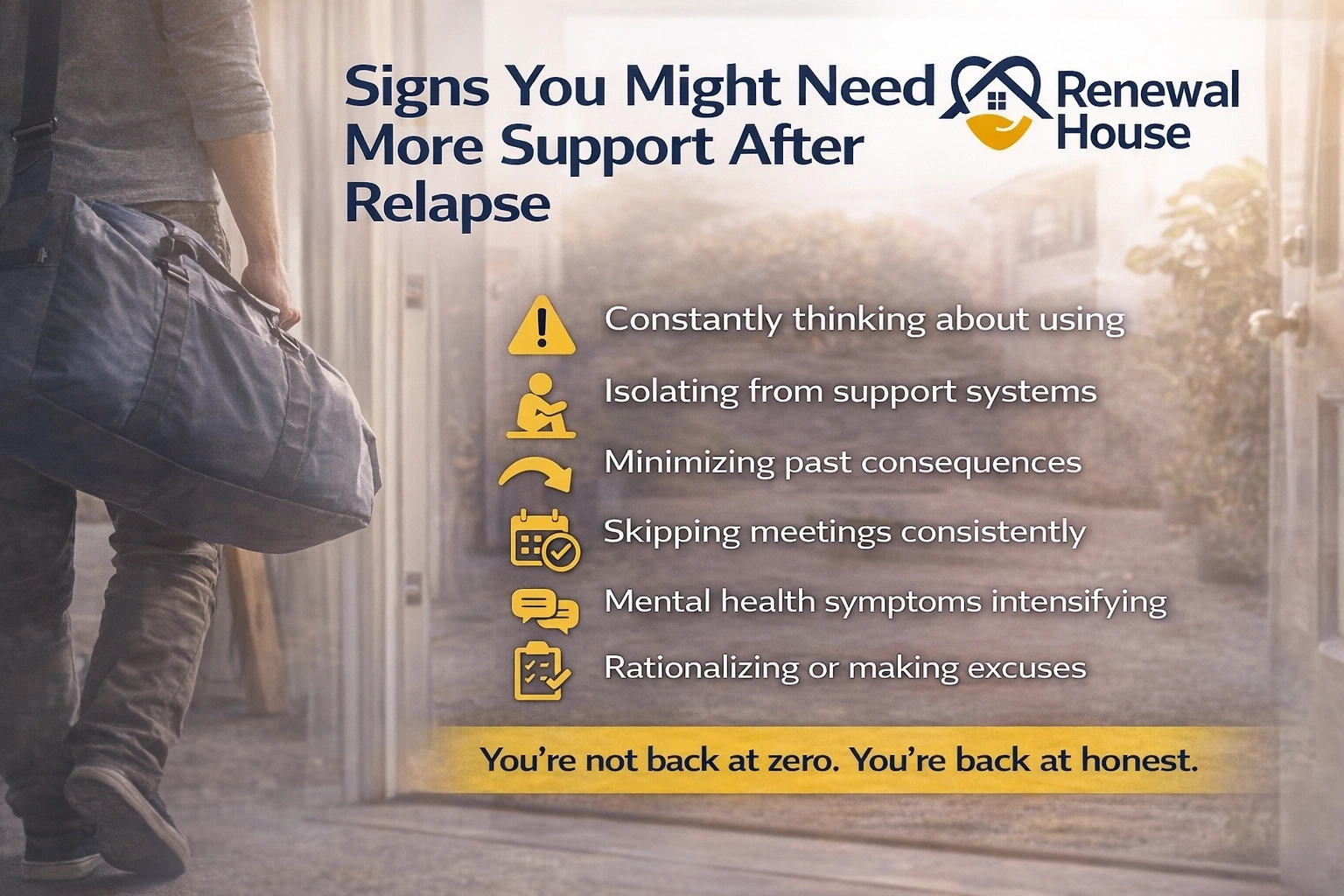
You’re not back at zero.
You’re back at honest.
FAQs for Alumni Feeling Unsteady
Is it common to relapse after 90 days?
Yes. Early recovery is a vulnerable period. While 90 days is significant, brain chemistry, habits, and emotional regulation are still stabilizing. Many people experience slips during this time — and many go on to long-term recovery afterward.
Does relapse mean treatment didn’t work?
No. Treatment provides tools, insight, and stabilization. Relapse often reveals areas that need reinforcement — not that the original work was meaningless.
When should I consider returning to structured care?
You might consider it if:
- You’ve relapsed and can’t regain stability.
- Cravings feel persistent or escalating.
- You’re isolating and avoiding accountability.
- Mental health symptoms are worsening.
- You’re hiding use again.
Early intervention is almost always easier than late-stage crisis.
I’m embarrassed to reach back out. What if they judge me?
Most treatment teams understand relapse as part of many recovery journeys. Reaching out signals responsibility, not failure. Programs are built to support — not shame.
What if I’m not sure it’s “bad enough”?
If you’re questioning it, that question itself matters. You don’t have to wait for catastrophe to justify asking for guidance. A conversation doesn’t lock you into a decision.
Can I recover after more than one relapse?
Absolutely. Many people in long-term recovery have multiple attempts behind them. What often changes is how quickly they respond when warning signs appear.
If this is the first hopeful thing you’ve read in weeks, let it settle gently.
You don’t have to pretend you’re fine.
You don’t have to prove you’re strong.
You don’t have to hide what’s happening.
Call (304) 601-2279 to learn more about our Residential treatment program in West Virginia.
