

There’s a strange pause that happens after you ask for help.
You expect something immediate. A shift. A clear sense that things are finally changing.
But instead, you’re left sitting with your thoughts—part relieved, part unsure, and maybe even a little scared of what comes next.
If you’ve found yourself looking into options like support for alcohol recovery, you’re already in that space. Not fully certain. But not willing to stay where you were either.
That matters more than you think.
It Starts Smaller Than You Expect
Most people imagine the first step as something big and final.
It’s not.
It’s usually just a conversation.
No pressure to commit. No expectation that you’ll have everything figured out. Just a space where you can say, “This is what’s been going on.”
You might talk about:
- How drinking has been affecting your life
- What made you reach out now instead of before
- What you’re worried could happen if nothing changes
You don’t need to sound confident. You don’t need a plan.
You just need to be honest enough to start.
You Don’t Have to Be 100% Ready
There’s a myth that keeps a lot of people stuck:
“I’ll get help when I’m sure.”
But certainty rarely comes first.
Most people walk into this process with mixed feelings. Part of you wants change. Another part isn’t ready to let go of what drinking has been doing for you—whether that’s relief, escape, or just familiarity.
Both things can be true at once.
You don’t need to resolve that tension before you begin.
You just need to be willing to sit with it.
The Focus Is on Understanding, Not Fixing
This part surprises people.
You’re not immediately handed a plan or told what’s wrong with you.
Instead, the focus is on understanding your reality.
What your days look like. What stress you’re carrying. What patterns have formed over time.
Because real change doesn’t come from someone telling you what to do.
It comes from seeing clearly where you actually are.
And for a lot of people, that clarity is the first real shift.
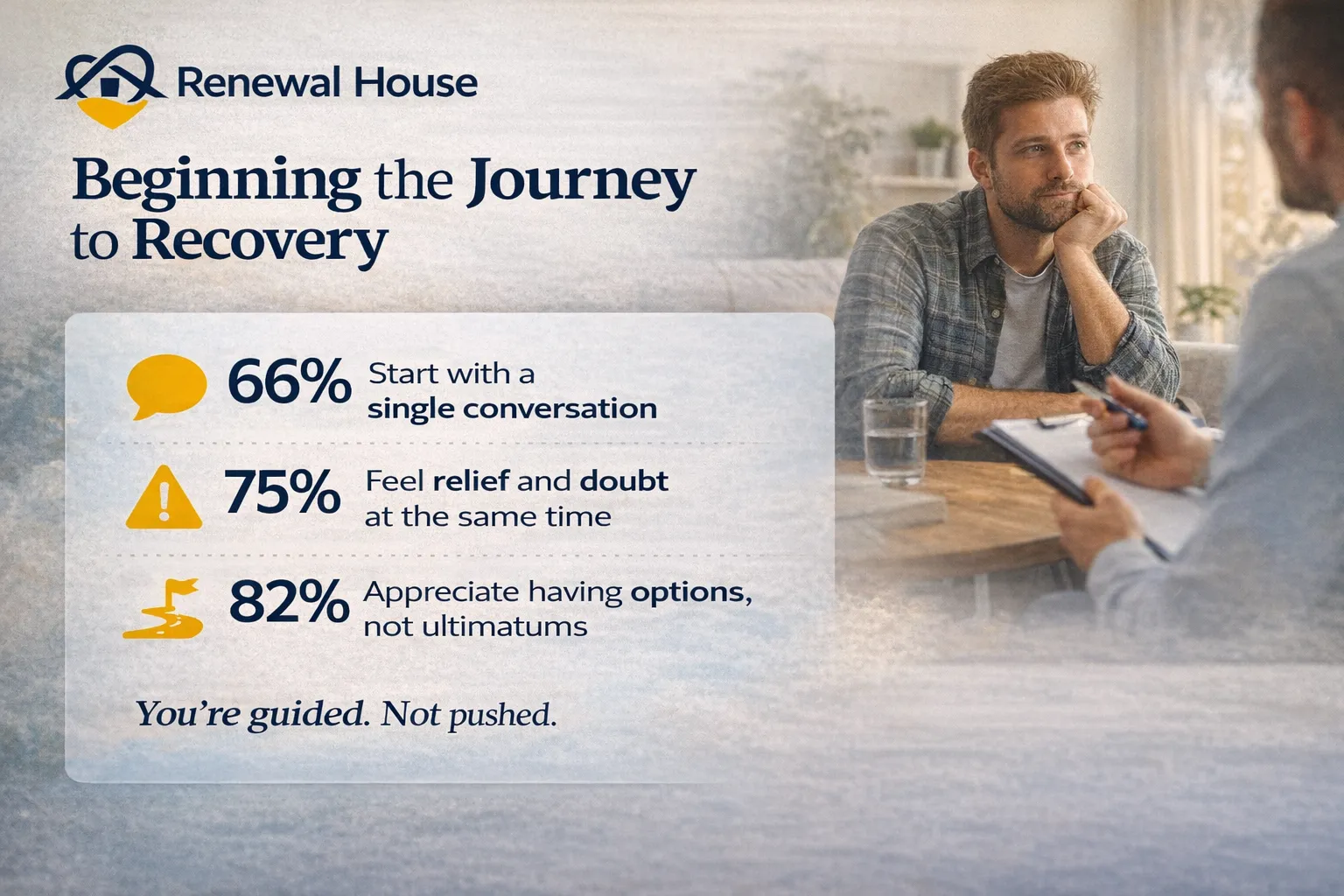
Relief and Doubt Often Show Up Together
You might feel a sense of relief after reaching out.
Like you finally said something out loud that you’ve been holding in.
And then, almost immediately, doubt follows.
Maybe it’s not that bad.
Maybe I can just handle it myself.
Maybe I overreacted.
This back-and-forth is part of the process.
It doesn’t mean you made the wrong choice.
It means you’re stepping into something unfamiliar—and your mind is trying to make sense of it.
You’re Not Going to Be Forced Into Anything
One of the biggest fears people carry is losing control.
That once they ask for help, everything starts moving too fast.
That they’ll be told where to go, what to do, and how to live—without a say.
That’s not how this works.
You’re guided. Not pushed.
You’re given options, not ultimatums.
You’re allowed to ask questions, take time, and move at a pace that feels possible.
Because real change doesn’t come from pressure.
It comes from readiness—and that builds, it’s not forced.
Structure Can Feel Strange at First—but It Has a Purpose
If you decide to keep going, you may step into something more structured.
That might include:
- Regular check-ins
- Group conversations
- Set times during the week focused on support
At first, this can feel unfamiliar.
Even restrictive.
But it’s not about control.
It’s about creating stability while everything inside you is still shifting.
Think of it like scaffolding. Temporary support that helps you rebuild something stronger.
You’re Still You—Just in a Different Moment
A lot of people worry about losing themselves in the process.
That asking for help means becoming someone else.
It doesn’t.
You’re still you.
You still have your personality, your preferences, your way of seeing the world.
This process isn’t about replacing you.
It’s about helping you reconnect with parts of yourself that got pushed aside.
The Emotional Weight Starts to Shift—Slowly
You may not notice it right away.
But over time, something begins to feel different.
Not lighter in a dramatic way.
But less heavy.
Less isolating.
People in Eastern Panhandle of West Virginia often describe this stage as the first time things stop feeling like something they have to hide.
That alone can change everything.
You Might Not Trust the Process Right Away
Let’s be honest.
You might sit in those early conversations thinking:
Is this really going to help?
How is talking about this supposed to change anything?
That skepticism is normal.
Trust doesn’t appear overnight.
It builds slowly—through small moments that feel real.
A conversation that lands differently.
A thought that shifts.
A day that feels just a little more manageable.
You don’t have to believe in the whole process yet.
You just have to stay long enough to see what changes.
The First Few Days Are About Showing Up, Not Getting It Right
There’s no perfect way to do this.
No version of you that has to show up “better” or more prepared.
The early days are simple:
- You show up
- You listen
- You notice what feels different
Some days will feel easier than others.
Some moments will feel uncomfortable.
That’s not failure.
That’s movement.
You Start to See That Change Is Possible—Even If It’s Slow
At some point, something shifts.
Not dramatically.
But enough to notice.
You might find yourself:
- Thinking differently about situations that used to trigger you
- Feeling moments of clarity where there used to be fog
- Realizing you’re capable of more than you thought
These aren’t big, obvious milestones.
They’re quiet signs that something is working.
And they matter.
You Don’t Have to Do This Alone Anymore
Before this, you may have been carrying everything quietly.
Managing it internally. Justifying it. Minimizing it.
Trying to stay in control.
Reaching out changes that.
You’re no longer the only one holding your story.
People seeking help in Huntington, West Virginia often describe this as the first real shift—not that everything is fixed, but that they’re no longer isolated inside it.
And that alone can make the next step feel possible.
FAQs: What Happens After You Ask for Help
Do I have to commit to anything right away?
No. The first step is a conversation, not a contract. You’re exploring options, not locking yourself into something.
What if I’m not fully ready to stop drinking?
That’s okay. You don’t need full readiness to begin. Mixed feelings are part of the process.
Will I be judged for how things have gotten?
No. The focus is on understanding and helping—not judging.
How fast does everything move?
It depends on your situation and what feels right for you. Some people move quickly, others take time. Both are valid.
What if I change my mind after reaching out?
You’re allowed to pause, ask questions, and take things at your own pace.
Is it normal to feel scared even after asking for help?
Yes. Fear and uncertainty are common. It means you’re stepping into something new.
This Step Matters More Than It Feels Like Right Now
It might not feel like a big turning point.
It might just feel like something you did because you didn’t know what else to do.
But this is how change begins.
Not with certainty.
Not with confidence.
But with a willingness to do something different.
And that willingness?
That’s enough to start.
Call 304-601-2279 or visit our treatment, alcohol services in in West Virginia to learn more about what the next phase of recovery can look like for you.
