

Watching your child struggle again after treatment can feel like emotional whiplash.
The first time they went to detox or treatment, there was fear—but there was also hope. Maybe your family believed this would finally be the turning point. Maybe your child sounded sincere about wanting to change. Maybe for a little while, things even seemed better.
Then came the phone calls again.
The emotional distance.
The missing money.
The relapse.
The crushing realization that you are somehow back in the same terrifying place you thought you had escaped.
For many parents, this creates a painful internal question:
“If treatment worked, why is this happening again?”
At Renewal House, we speak with families every day carrying that exact heartbreak. Exploring live-in treatment and recovery support after relapse can feel emotionally exhausting—but it does not mean your child is beyond help.
In fact, many people who eventually build lasting recovery needed more than one attempt before things truly began to click.
Recovery Is Not a Straight Line—Even Though Families Wish It Were
Parents naturally want treatment to create a clear turning point:
Treatment in.
Recovery out.
But addiction recovery rarely unfolds that neatly.
Healing from substance use is not just about stopping drugs or alcohol. It often involves rebuilding emotional regulation, coping skills, self-worth, relationships, routines, and identity itself. That process can take time—especially for young adults still trying to figure out who they are underneath the addiction.
Relapse does not erase every lesson learned during treatment.
A young adult may relapse and still:
- Understand their triggers more clearly
- Recognize warning signs sooner
- Become more emotionally honest
- Learn what support they actually need
- Gain awareness about the role substances play in their life
As clinicians, we often tell parents something difficult but important:
Progress and relapse can exist in the same story.
That doesn’t make relapse easy. It hurts deeply. But it also does not automatically mean treatment “failed.”
Detox Helps the Body—But Recovery Requires More Than Physical Sobriety
One of the most common misunderstandings families have is believing detox alone should solve the problem.
Detox is important. It stabilizes the body physically and helps someone safely stop using substances. But emotional recovery usually starts after detox—not during it.
This is one reason some people keep relapsing after detox despite genuinely wanting things to change.
Once substances leave the body, many people are suddenly left face-to-face with the emotions they had been numbing:
- Anxiety
- Depression
- Trauma
- Shame
- Loneliness
- Emotional emptiness
- Fear
- Restlessness
Without deeper support, those feelings can become overwhelming very quickly.
Many young adults leave detox sincerely motivated, only to return to the same environments, routines, stressors, and coping patterns that existed before treatment. It’s a little like trying to heal a wound while repeatedly reopening it every day.
Longer-term support often gives people enough time and structure to begin building something more stable underneath their sobriety.
Parents Often Blame Themselves More Than They Admit
Most parents carry quiet guilt after relapse.
You replay conversations in your mind.
You wonder whether you were too strict or too lenient.
You think about missed warning signs.
You question decisions you made years ago.
Sometimes parents feel embarrassed talking to friends or relatives because they worry people are silently judging their family.
But addiction is not caused by one parenting mistake.
Most families dealing with addiction loved hard long before they ever reached out for professional help. Many parents become exhausted trying to rescue, protect, monitor, encourage, and emotionally hold their child together at the same time.
That level of stress changes families too.
Some parents stop sleeping normally.
Some become hypervigilant every time the phone rings.
Some start living in constant fear of overdose, arrest, or devastating news.
Loving someone with addiction can feel like standing outside during a storm holding the door open, hoping they come back inside before the weather destroys them.
That exhaustion is real.
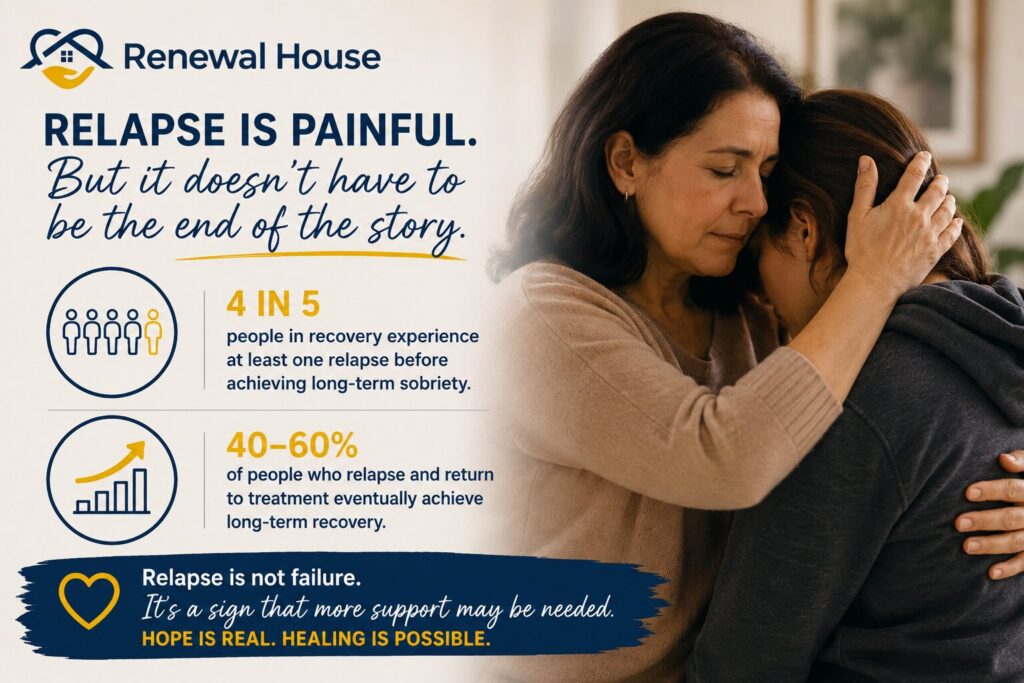
The Second Attempt Often Looks Emotionally Different
There is something important many families notice the second time around:
More honesty tends to appear.
The first treatment attempt is often driven by pressure:
Legal consequences.
Family conflict.
Fear.
Ultimatums.
Financial problems.
But after relapse, denial sometimes cracks open in a different way.
Your child may begin recognizing patterns they previously minimized. They may become more aware of how substances are affecting their relationships, mental health, or self-worth. Sometimes they return to treatment more emotionally vulnerable than before—not because they “failed,” but because the reality of addiction has become harder to ignore.
We’ve seen young adults arrive feeling deeply ashamed after relapse, only to slowly become more open, reflective, and emotionally engaged during treatment than they were the first time.
Painful experience can sometimes create emotional honesty where fear and pressure alone could not.
Mental Health Is Often Part of the Story
For many young adults, substance use is not just about partying or poor decisions.
It can become a form of survival.
Some people use substances to manage panic attacks. Others use to escape depression, trauma, emotional numbness, self-hatred, or overwhelming anxiety. Many young adults do not even fully realize how much emotional pain they are carrying until substances are removed.
This matters because sobriety alone does not automatically heal emotional suffering.
When mental health and substance use collide, recovery often requires more than simply “trying harder.” A person may truly want sobriety while still feeling emotionally miserable underneath the surface.
That internal conflict can drive relapse.
Longer-term care allows time to address both substance use and the emotional pain beneath it. For some people, this becomes the first time they’ve slowed down enough to actually understand what they’ve been running from.
Healing Takes Longer Than Most Families Expect
Parents often ask:
“How long will this take?”
The honest answer is that healing rarely happens quickly.
Our culture loves dramatic recovery stories where someone enters treatment and instantly changes forever. Real recovery is usually slower and quieter than that.
It often looks like:
- Sleeping through the night consistently again
- Learning how to tolerate uncomfortable emotions
- Rebuilding trust slowly
- Practicing honesty
- Repairing daily routines
- Developing healthier coping skills
- Learning how to exist without emotional chaos
Those changes take time.
For some young adults, live-in treatment provides the first stable environment they’ve experienced in years. Away from immediate triggers and unhealthy routines, they finally have room to breathe long enough for deeper work to begin.
And healing rarely happens all at once.
It usually arrives in moments:
A genuine conversation.
A calmer reaction.
A full week sober.
A laugh that sounds real again.
Like sunlight returning after a long winter, recovery often comes back gradually before families fully realize it’s happening.
Families Need Support Too
Parents sometimes become so focused on saving their child that they completely abandon their own emotional well-being.
That’s understandable. Fear narrows people’s worlds.
But families need care too.
You deserve support while navigating this process. You deserve places where you can speak honestly about your exhaustion, anger, grief, confusion, and fear without judgment.
Because loving someone through addiction can create trauma inside families as well.
Many parents become emotionally trapped between hope and self-protection:
“I want to believe things can improve again… but I’m terrified to trust it.”
That tension is incredibly common after relapse.
And it’s okay if hope feels complicated right now.
Whether your family is searching for help in Charleston or looking into care in the Eastern Panhandle of West Virginia, finding the right support often begins with understanding that relapse does not erase the possibility of recovery.
Your Child Is Not Starting From Zero
This matters more than many families realize.
Even after relapse, your child is not beginning again from nothing.
They may already:
- Understand recovery language
- Recognize personal triggers
- Know which environments are dangerous
- Understand how quickly relapse progresses
- Carry emotional insight they didn’t have before
- Have a clearer understanding of what kind of support they need
Recovery experience—even painful recovery experience—still teaches people something.
Some of the strongest recoveries we’ve seen began after families believed all hope was gone. Not because treatment magically fixed everything overnight, but because eventually the person received enough time, structure, emotional support, and honesty to build something more stable underneath them.
The second attempt is not simply repeating the first.
Sometimes it becomes the moment things finally begin to deepen.
FAQ About Returning to Treatment After Relapse
Does relapse mean treatment failed?
No. Relapse is painful, but it does not mean recovery is impossible. Many people require multiple treatment attempts before achieving long-term stability.
Why do some people relapse after detox?
Detox addresses physical withdrawal, but emotional recovery often requires longer-term support. Anxiety, trauma, depression, stress, and environmental triggers can all contribute to relapse afterward.
Is longer-term care sometimes necessary?
Yes. Some people benefit from additional structure, stability, and time away from triggers to build healthier coping skills and emotional regulation.
Should parents still have hope after relapse?
Yes. Many people who eventually achieve lasting recovery struggled more than once before things began improving. Relapse does not erase the possibility of healing.
Can mental health issues affect recovery?
Absolutely. Anxiety, depression, trauma, and emotional pain often exist alongside substance use. Treating both together can improve long-term recovery outcomes.
What if my child does not seem fully motivated yet?
Motivation often changes over time. Some young adults enter treatment feeling resistant or uncertain but become more emotionally engaged as they stabilize and feel safe.
How can parents support recovery without controlling everything?
Support usually works best when paired with healthy boundaries, emotional honesty, and professional guidance. Families cannot force recovery alone—and they should not have to carry that responsibility entirely by themselves.
Hope Does Not Have to Disappear After Relapse
If your child is struggling again, you are not foolish for still wanting to believe things can improve.
Recovery is rarely simple. Rarely fast. Rarely perfect.
But families are not out of options simply because treatment did not fully stick the first time.
Sometimes healing requires more time.
More honesty.
More support.
A different environment.
A deeper level of care.
And sometimes the second attempt becomes the one where real emotional change finally begins to take root.
Call (304) 601-2279 or visit our programs for residential addiction treatment services in Comfort, West Virginia to learn more about taking the next step.
