
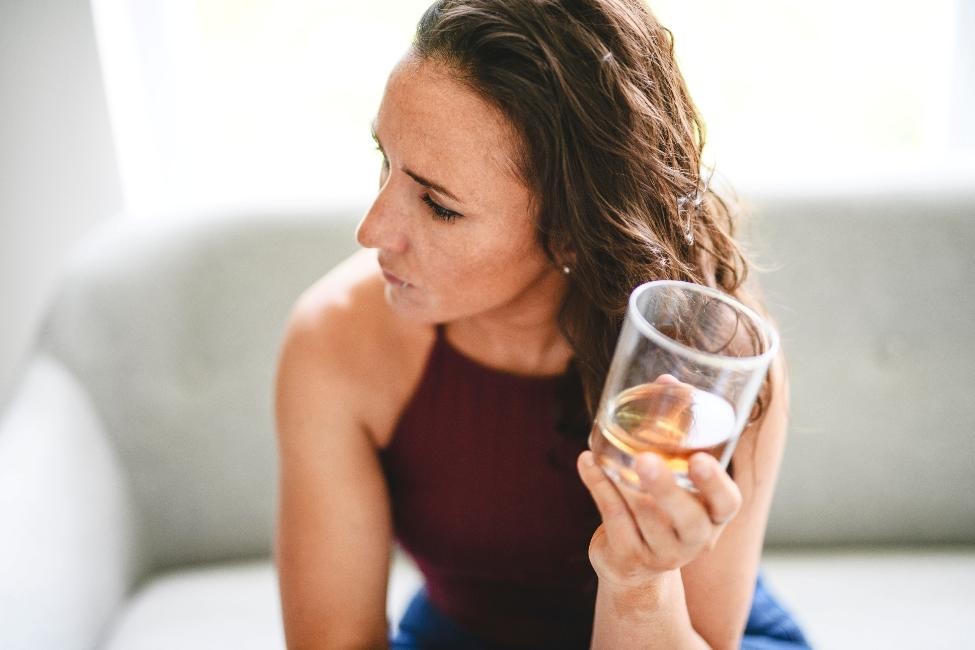
Alcohol problems do not always look the way people expect. Someone may keep working, maintain relationships, and still struggle with drinking. The warning signs often appear gradually, which makes them easy to dismiss or explain away.
Alcohol use disorder (AUD) involves more than how often or how much someone drinks. It also affects control, responsibilities, relationships, health, and daily life. Recognizing these patterns can help you understand when drinking has become more than an occasional habit.
The DSM-5 identifies 11 signs that clinicians use when evaluating alcohol use disorder. Understanding these signs can help you recognize concerning patterns in yourself or someone you care about.
Why This List Is Harder to Read Than It Looks
Alcohol use disorder isn’t diagnosed based on how much someone drinks or how often. It’s diagnosed based on a pattern — what drinking does to a person’s life, their relationships, their ability to function, and their ability to stop or cut back when they try. That distinction matters because it’s exactly what makes the signs so easy to explain away one at a time.
Each item on this list has a rational-sounding counterargument. Taken individually, any one of them can be dismissed. Taken together, consistently, over time — that’s when the picture changes. Alcohol use disorder is a medical condition, not a character flaw, and recognizing it is not a verdict. It’s a starting point.
The 11 Signs of Alcohol Use Disorder (DSM-5)
The clinical criteria come from the DSM-5, the diagnostic manual used by physicians and clinicians across the country. A diagnosis of alcohol use disorder requires at least 2 of the following 11 criteria to be present within a 12-month period. Mild AUD is 2 to 3 criteria. Moderate is 4 to 5. Severe is 6 or more.
Here’s what each one actually looks like outside a clinical manual.
1. Drinking more, or for longer, than intended. Not just occasionally going a drink or two over — but consistently ending up further down the bottle than you planned, and noticing it afterward without being able to reliably change it.
2. Wanting to cut back or stop, but not being able to. This one tends to get minimized. People tell themselves they could stop if they really wanted to. The criterion isn’t about whether you want to — it’s about whether you’ve tried and found it harder than expected.
3. Spending a lot of time drinking, recovering, or obtaining alcohol. When alcohol starts organizing the day — planning around it, recovering from it, thinking about when the next drink will happen — it’s taking up more space than it should.
4. Craving alcohol when not drinking. A pull toward alcohol that shows up as restlessness, irritability, or preoccupation when drinking isn’t available. Not everyone experiences this as an obvious craving — sometimes it shows up as just feeling off until the first drink.
5. Drinking has interfered with work, school, or home responsibilities. Missed deadlines. A shorter fuse at home. Things that didn’t get done. The connection to drinking isn’t always visible from the outside, and often isn’t acknowledged on the inside either.
6. Continuing to drink despite relationship problems caused or worsened by alcohol. A partner has raised it. A friend has said something. The conversation has happened more than once. And yet the drinking continues.
7. Giving up activities that used to matter in order to drink. Hobbies, sports, social events that don’t involve alcohol — quietly dropped. Sometimes framed as losing interest, sometimes just drifting away from things that once felt important.
8. Drinking in situations where it’s physically dangerous. Before driving. Before operating equipment. In situations where impairment creates a real risk — and doing it anyway.
9. Continuing to drink despite knowing it’s causing or worsening a physical or mental health problem. The doctor has said something about the liver. Anxiety is worse the day after drinking. Sleep is disrupted. And still the pattern continues.
10. Needing more alcohol to get the same effect (tolerance). What used to be two drinks now takes four to feel the same way. Tolerance is often treated as a point of pride — being able to “handle” more — when it’s actually a sign the brain has adapted to the presence of alcohol.
11. Experiencing withdrawal symptoms when alcohol wears off. Sweating, shaking, nausea, anxiety, or insomnia in the hours after drinking stops. In severe cases: seizures. Withdrawal symptoms are a sign of physical dependence and are medically significant.
The Signs That Are Easiest to Rationalize
A few of these criteria deserve extra attention because they’re the ones that most reliably get explained away.
Tolerance is one. Needing more to feel the same effect feels like a personal threshold, a body quirk, proof that someone “handles it well.” It’s actually evidence that the brain has reorganized itself around regular alcohol exposure. That reorganization is what makes stopping harder.
Drinking to decompress is another. After a long day, after a hard week, after a difficult conversation — the drink that takes the edge off. When that pattern becomes the primary way stress gets managed, and when the absence of that drink creates its own stress, the line between habit and dependence has moved.
The morning-after guilt without behavior change is the third. The recognition, in the clear light of the next morning, that last night went further than it should have. Followed by the intention to do better. Followed by the same pattern repeating. The guilt without change is itself a data point.
Signs in How You Think About Drinking — Not Just How Much You Drink
Some of the most telling signs show up in the thought patterns around alcohol rather than the drinking itself. Planning events or travel around whether alcohol will be available. Feeling irritable or anxious at gatherings where drinking isn’t happening. The relief-drink — the first one that makes everything feel normal again, rather than better than normal. The defensiveness when someone raises a concern, even gently.
None of these are diagnostic on their own. But they’re worth noticing, because they indicate that alcohol has moved from something enjoyed occasionally to something that’s organizing how a person thinks about their day.
When to Take These Signs Seriously
The number of criteria that apply consistently matters more than the severity of any single one. Two criteria, present regularly over the past year, meets the threshold for a diagnosis. That doesn’t mean someone is in crisis — mild AUD is real, and earlier intervention works better than waiting for things to get worse.
If two or more of these apply, consistently, that’s worth a conversation with someone qualified to help assess it. Not a verdict. A starting point. Alcohol addiction treatment looks different depending on where someone is in the process — and there’s a range of options between “nothing” and “residential treatment.”
It’s also worth reading about what heavy drinking actually does to the brain — because understanding the physical picture often makes the behavioral one easier to take seriously.
What Happens Next If You Recognize Yourself Here
Recognition is the hardest part. Most people who eventually get help look back and identify a moment — not when things got bad enough, but when they stopped arguing with what they already knew. This list is designed to be that moment, if it’s time.
Renewal House works with people at every stage of the process, including people who aren’t sure yet whether what they’re experiencing is serious enough to warrant help. The answer to that question is almost always: if you’re asking, it’s worth a conversation. Our residential addiction treatment program is built for people who are ready to stop managing this alone. Reach out to our team when you’re ready.
Frequently Asked Questions
What is the difference between alcohol use disorder and alcoholism?
“Alcoholism” is an older, colloquial term. Alcohol use disorder is the current clinical diagnosis, used across the DSM-5 and medical literature. It covers a spectrum from mild to severe, which the older term didn’t capture well. They refer to the same underlying condition.
Can you have alcohol use disorder if you only drink on weekends?
Yes. The criteria for AUD are not about frequency of drinking — they’re about the pattern and its impact. Someone who drinks only on weekends but consistently loses control of how much, experiences cravings, or has seen their drinking affect relationships or responsibilities can meet the diagnostic threshold.
Is alcohol use disorder genetic?
There is a significant genetic component — family history of AUD meaningfully increases risk. But genetics isn’t destiny. Environmental factors, stress, trauma history, and co-occurring mental health conditions all contribute. AUD develops through a combination of factors, not any single cause.
What’s the difference between mild, moderate, and severe AUD?
The distinction is based on how many DSM-5 criteria are present in a 12-month period. Mild: 2 to 3 criteria. Moderate: 4 to 5. Severe: 6 or more. All three are genuine diagnoses — mild AUD is not “not really AUD.” Earlier intervention at the mild stage typically produces better outcomes than waiting for severity to escalate.
