

You’re still showing up to work.
Your responsibilities are handled.
From the outside, your life looks stable—maybe even impressive.
And that’s exactly why the drinking continues longer than it should.
As a clinician, I’ve sat across from countless people who seemed to have everything together on paper. Careers intact. Families intact. Bills paid. But behind that structure was an exhausting private struggle with alcohol that had been quietly escalating for years.
High-functioning drinking rarely announces itself with dramatic collapse. It lingers in the background of otherwise successful lives, often delaying the moment someone finally admits they need support.
If you’ve begun wondering whether alcohol is quietly draining more from your life than it gives, it may help to explore alcohol recovery support and understand why high-functioning individuals often wait so long before seeking help.
Success Can Hide the Problem Longer Than People Realize
One of the biggest misconceptions about alcohol problems is that they always look chaotic.
People imagine missed workdays, legal trouble, or obvious instability. But many individuals who struggle with alcohol maintain a polished exterior for years.
They meet deadlines.
They lead teams.
They manage households.
In many cases, they are the dependable person everyone else leans on.
Because life still appears functional, the drinking rarely feels urgent. It becomes something quietly woven into daily routines—an evening ritual, a social habit, a way to transition out of stressful days.
But stability on the outside doesn’t mean the situation is healthy.
Alcohol can quietly reshape sleep, mood, focus, and stress tolerance long before the outside world notices anything has changed.
And by the time the internal toll becomes undeniable, the pattern may have been running for years.
The First Warning Sign Is Often Exhaustion
Most high-functioning drinkers don’t walk into my office saying they’ve lost control.
They usually say something simpler.
“I’m just tired all the time.”
Alcohol interferes with the body’s ability to reach deep, restorative sleep. Even if someone falls asleep quickly, the quality of that sleep is often disrupted.
Over time, the results start to show up in subtle ways.
Morning fatigue becomes normal.
Mental sharpness fades slightly.
Stress feels heavier than it used to.
Many people respond by pushing themselves harder—more coffee, longer work hours, stricter routines.
But the underlying strain continues building quietly in the background.
Imagine trying to run a marathon while carrying a backpack filled with stones. At first, it feels manageable. Eventually, the weight becomes impossible to ignore.
High-Functioning Drinkers Often Compare Themselves to Extreme Cases
Another powerful reason people delay help is comparison.
High-functioning individuals frequently measure their situation against the most severe examples they’ve seen.
They think about someone who lost their career.
Someone who drinks from the moment they wake up.
Someone whose life completely collapsed.
Compared to those images, their own drinking seems manageable.
They might think:
“I still have my job.”
“My relationships are okay.”
“I’m not drinking all day.”
This comparison creates a mental loophole that keeps people stuck.
As long as their life hasn’t completely unraveled, the situation doesn’t feel serious enough to address.
But waiting for things to collapse is rarely necessary—and often far more painful.
Alcohol Slowly Stops Solving the Problem It Was Meant to Fix
For many high-functioning people, alcohol originally served a clear purpose.
It helped them relax after demanding days.
It helped quiet racing thoughts before sleep.
It made social situations feel easier.
At first, those benefits can feel real.
But over time, the brain adapts. The relief becomes shorter. The after-effects become heavier.
Instead of reducing stress, alcohol begins amplifying it.
Sleep becomes fragmented.
Anxiety creeps into the following morning.
Mood swings appear that weren’t there before.
Many people respond by drinking slightly more to compensate for the growing discomfort.
And the cycle quietly tightens.
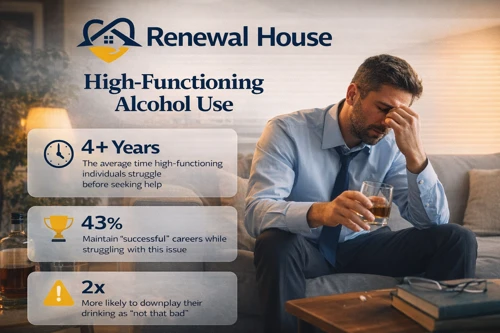
High Achievers Often Believe They Should Be Able to Fix It Alone
Another reason treatment gets delayed is the mindset that successful people often carry.
High-functioning individuals are used to solving problems.
They manage teams.
They navigate complex projects.
They overcome obstacles through discipline and determination.
So when alcohol begins causing concern, the instinct is often the same: fix it privately.
They create personal rules.
Only drink on weekends.
Limit drinks during the week.
Switch to lighter alcohol.
Take a break for a few weeks.
Sometimes those strategies work temporarily. Often they slowly erode as stress returns.
The problem isn’t a lack of willpower. It’s that alcohol changes how the brain regulates reward, stress, and impulse control.
And that’s incredibly difficult to manage alone.
The Turning Point Is Usually Quiet
Most people imagine that recovery begins after a dramatic event.
But for many high-functioning drinkers, the turning point is far quieter.
It might happen during a restless night staring at the ceiling.
It might happen while sitting in the car after work, realizing the same routine has repeated itself for years.
Or it might happen during a simple moment of honesty:
“I’m tired of managing this.”
That moment—when someone finally stops arguing with themselves—is often where real change begins.
Some individuals begin exploring recovery options close to home, including care available in Charleston, West Virginia, where support can fit around work schedules and daily responsibilities.
Sometimes proximity makes the first step feel less overwhelming.
The Brain Learns to Rely on Alcohol Faster Than People Expect
One reason high-functioning alcohol use becomes difficult to break is neurological.
Alcohol affects the brain’s reward system, particularly the release of dopamine and other chemicals tied to relief and pleasure.
Over time, the brain begins associating alcohol with relaxation and emotional reset.
That connection becomes stronger with repetition.
Even people who appear disciplined and successful can find themselves feeling an almost automatic pull toward drinking after stressful days.
This isn’t weakness. It’s biology.
Understanding that dynamic often helps people stop blaming themselves and start looking for structured support instead.
High-Functioning People Often Thrive Once They Seek Support
One of the most encouraging patterns I’ve seen as a clinician is what happens after high-functioning individuals finally reach out for help.
The same traits that fueled their careers often become strengths in recovery.
They’re reflective.
They’re goal-oriented.
They’re willing to do difficult work if it leads to meaningful change.
When those qualities are paired with the right environment and support system, progress can happen surprisingly quickly.
Many people later describe recovery as feeling like they removed a constant background weight they had been carrying for years.
Some individuals even explore support in surrounding communities—such as programs offering recovery guidance in the Eastern Panhandle of West Virginia—where new environments can sometimes help create new habits.
The Biggest Myth Is That Things Have to Collapse First
Perhaps the most harmful myth surrounding alcohol problems is the belief that someone must hit “rock bottom” before they deserve help.
That idea keeps countless high-functioning individuals stuck.
But waiting for catastrophe isn’t necessary.
In fact, the earlier someone addresses the pattern, the easier the recovery process often becomes.
Recognizing the problem early can prevent years of escalating physical, emotional, and relational strain.
Recovery doesn’t require disaster.
Sometimes it simply begins with honesty.
Frequently Asked Questions
Can someone have a serious alcohol problem and still be successful?
Yes. Many individuals struggling with alcohol maintain careers, relationships, and responsibilities for years. External success can sometimes mask internal stress, fatigue, and emotional strain caused by alcohol use.
Why do high-functioning people delay seeking help?
Success can create the illusion of control. If someone is still performing well professionally and maintaining responsibilities, it may feel like the drinking isn’t severe enough to require help.
Is exhaustion really a warning sign?
Very often. Chronic fatigue, disrupted sleep, and reduced stress tolerance are some of the earliest indicators that alcohol may be interfering with overall health and mental clarity.
Why is it hard to cut back alone?
Alcohol changes the brain’s reward system over time, making it harder to regulate cravings and stress responses independently. Structured support often helps people interrupt that cycle more effectively.
What kinds of support work for busy professionals?
Many individuals benefit from structured daytime care or multi-day weekly treatment that allows them to maintain work responsibilities while rebuilding healthier coping strategies.
Does asking for help mean life is falling apart?
Not at all. Many people seek support precisely because they want to protect the life they’ve built before alcohol begins causing larger disruptions.
High-functioning drinking often delays treatment because life still looks stable from the outside.
But the internal cost—fatigue, stress, emotional strain—tends to grow quietly over time.
If you’ve been managing alcohol privately while continuing to succeed professionally, you’re far from alone. Many people in similar positions eventually reach a moment where the effort of maintaining the pattern becomes heavier than the idea of changing it.
Support exists for people who are ready to reclaim their energy, clarity, and peace of mind.
Call 304-601-2279 to learn more about our treatment, Alcohol Addiction Treatment in West Virginia.
