

Many people search how long does Ativan stay in your system because they have an upcoming drug test or simply want to know when the medication will wear off.
Others are asking a much more personal question.
They are thinking about stopping Ativan.
Maybe the prescription was originally intended for short-term anxiety, panic attacks, or insomnia, but weeks gradually turned into months. Perhaps the medication no longer seems as effective as it once did, or there is concern about dependence. Some people simply want to know whether it is safe to quit on their own.
Understanding how long Ativan remains in the body is an important part of that conversation—but it is not the whole story.
Even after the medication begins leaving your bloodstream, your brain may still be adjusting to functioning without it. For people who have developed physical dependence, withdrawal symptoms can begin as drug levels fall. In some cases, abruptly stopping Ativan can lead to serious complications, including seizures.
At Renewal House, we help individuals safely discontinue benzodiazepines through medically supervised care. If you are considering stopping lorazepam, learning more about benzodiazepine detox may help you make a safer, more informed decision.
What Ativan (Lorazepam) Is
Ativan is the brand name for lorazepam, a prescription medication in the benzodiazepine class. Benzodiazepines are central nervous system depressants that slow activity in the brain by enhancing the effects of gamma-aminobutyric acid (GABA), a neurotransmitter responsible for promoting relaxation and reducing excessive nerve activity.
Doctors commonly prescribe Ativan for:
- Anxiety disorders
- Panic attacks
- Short-term treatment of severe anxiety
- Insomnia related to anxiety
- Seizure disorders
- Sedation before medical procedures
Because it acts relatively quickly, many people notice relief within an hour after taking an oral dose.
Although Ativan is highly effective when used appropriately, it is generally intended for short-term treatment. Taking it regularly for extended periods may increase the risk of tolerance, dependence, and withdrawal if the medication is stopped suddenly.
That is why many healthcare providers carefully monitor long-term benzodiazepine use.
Understanding Ativan’s Half-Life
One of the most important concepts for understanding how long does Ativan stay in your system is its half-life.
A medication’s half-life refers to the amount of time it takes for approximately half of the drug to be eliminated from the bloodstream.
For Ativan:
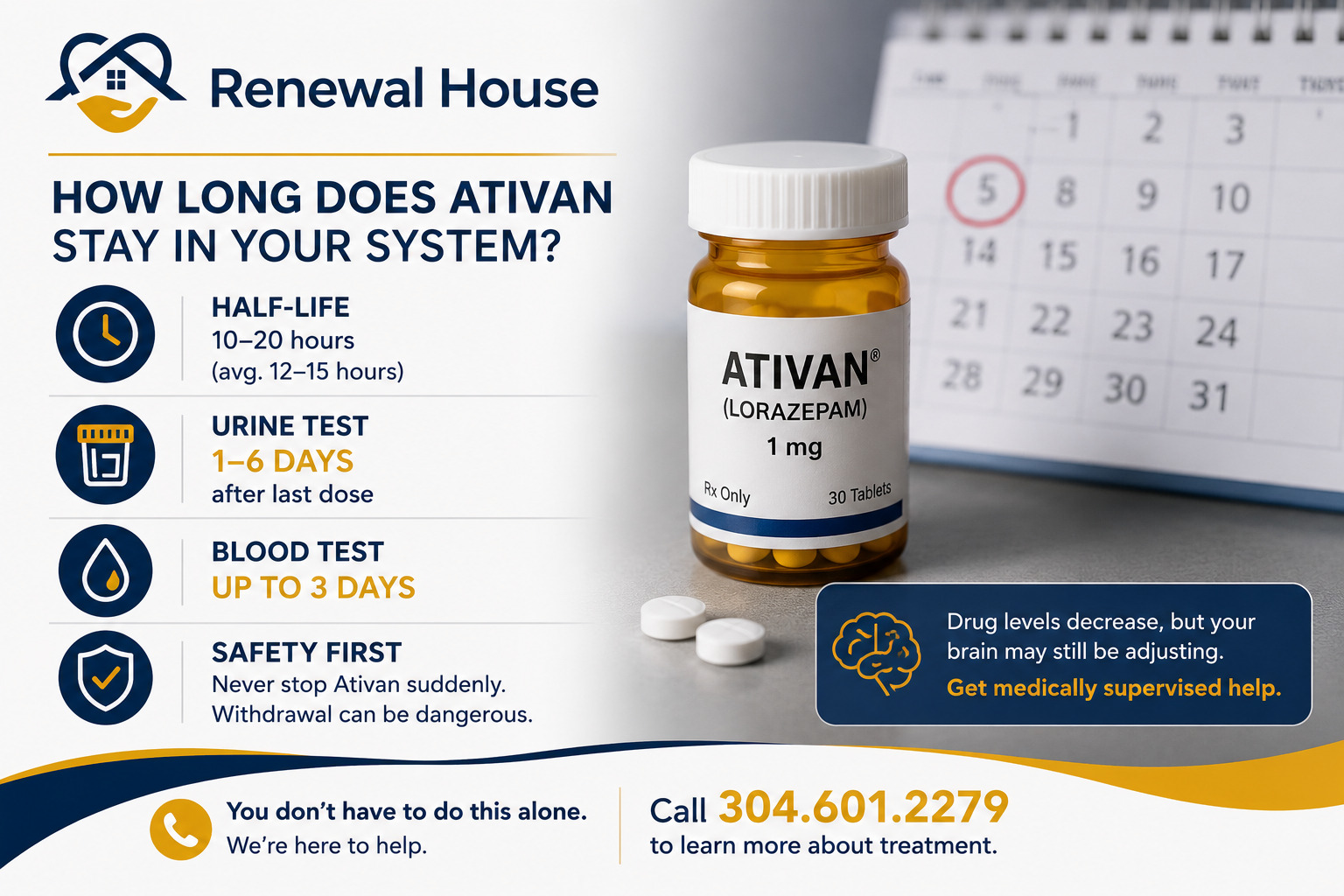
- Average half-life: 10 to 20 hours
- Most healthy adults average 12 to 15 hours
- Complete elimination usually takes approximately five half-lives
This means that although half of a dose may leave your body within a day, small amounts remain present much longer.
Unlike diazepam (Valium), Ativan does not produce long-lasting active metabolites that continue affecting the body after the original medication has been processed. This generally makes its elimination more predictable.
However, elimination speed still varies significantly from one individual to another.
How Long Does Ativan Stay in Your System?
Although the medication’s effects may wear off within several hours, laboratory tests may detect Ativan for much longer.
Detection windows vary depending on the type of test used.
Urine Testing
Urine testing is the most common form of drug screening.
For most individuals:
- Detectable approximately 1 to 6 days
Heavy or prolonged use may slightly extend this timeframe.
Blood Testing
Blood tests are primarily used in hospitals or emergency medical settings.
Detection generally lasts:
- Up to 3 days
Saliva Testing
Saliva testing is less frequently used for benzodiazepines.
Typical detection window:
- Up to 8 hours
Hair Testing
Although hair testing can sometimes identify prior drug exposure for several months, it is rarely used for routine Ativan screening and is not considered the standard method for monitoring recent use.
Feeling the Effects vs. Detecting the Drug
A common misunderstanding is that once someone no longer feels the medication working, it has completely left the body.
That is not necessarily true.
The calming effects of Ativan often diminish long before laboratory testing becomes negative.
Likewise, withdrawal symptoms may begin even though measurable amounts of the medication remain in the body.
For this reason, using how you feel as the only measure of whether Ativan has cleared your system can be misleading.
Factors That Affect How Long Ativan Stays in Your System
Several individual factors influence how quickly the body processes lorazepam.
Dosage
Higher doses require more time for the body to eliminate.
Someone taking 2 mg several times daily will generally clear the medication more slowly than someone who occasionally takes 0.5 mg.
Duration of Use
Individuals who have taken Ativan for months or years often require more careful monitoring than those who only used it briefly.
Long-term use also increases the likelihood of physical dependence.
Age
As people age, metabolism often slows naturally.
Older adults may eliminate Ativan more slowly than younger adults.
Liver Function
Although Ativan relies less heavily on liver metabolism than some benzodiazepines, impaired liver function can still influence how efficiently the medication is processed.
Kidney Function
The body must eliminate Ativan’s byproducts after metabolism. Reduced kidney function may contribute to slower clearance in some individuals.
Overall Health
Hydration, nutrition, body composition, metabolic rate, and certain medical conditions all influence drug elimination.
Other Medications
Some prescription medications may affect how quickly lorazepam is processed or increase its sedating effects when taken together.
Always discuss medication changes with your healthcare provider before stopping or combining medications.
What Ativan’s Clearance Profile Means for Withdrawal
Many articles stop after explaining detection windows.
For someone considering stopping Ativan, the more important question is:
What happens after the medication begins leaving the body?
The answer depends largely on whether physical dependence has developed.
When someone has taken Ativan regularly, the brain adapts to the medication’s presence. As drug levels decline, the nervous system may become temporarily overactive while attempting to regain balance.
This is what produces withdrawal symptoms.
Early symptoms may include:
- Anxiety
- Restlessness
- Trouble sleeping
- Sweating
- Irritability
- Tremors
- Increased heart rate
- Difficulty concentrating
Some individuals also experience:
- Nausea
- Headaches
- Sensitivity to light and sound
- Muscle tension
In more severe situations, withdrawal can lead to:
- Hallucinations
- Severe confusion
- Seizures
Although not everyone experiences severe withdrawal, the possibility of seizures makes abruptly discontinuing Ativan potentially dangerous for individuals who have developed dependence.
Why You Should Never Stop Ativan Suddenly
People sometimes assume that because Ativan was prescribed by a physician, it can safely be stopped whenever they choose.
Unfortunately, that is not always the case.
Stopping abruptly may place unnecessary stress on the nervous system, especially after regular or long-term use.
Instead, healthcare providers often recommend one of two approaches:
- A carefully supervised taper that gradually reduces dosage over time
- Benzodiazepine Addiction Treatment for individuals with significant dependence or higher withdrawal risk
The safest option depends on factors such as:
- Daily dosage
- Length of use
- Previous withdrawal attempts
- Medical history
- Other medications
- Mental health conditions
Only a qualified healthcare professional can determine the safest plan.
How Medical Detox Helps
Benzodiazepine Addiction Treatment is designed to help individuals discontinue benzodiazepines as safely and comfortably as possible.
Rather than facing withdrawal alone, patients receive continuous monitoring throughout the early stages of recovery.
Benzodiazepine detox may include:
- Ongoing assessment of withdrawal symptoms
- Monitoring of blood pressure, heart rate, and overall health
- Medication management when clinically appropriate
- Emotional support throughout detox
- Planning for continued treatment after stabilization
Detox addresses the physical aspect of dependence, but lasting recovery often involves additional therapy and ongoing support after withdrawal is complete.
When It May Be Time to Seek Professional Help
Many people wait until withdrawal becomes overwhelming before asking for help.
Earlier intervention is often safer.
You may benefit from a professional evaluation if:
- You have been taking Ativan daily for several weeks or longer.
- You feel anxious or shaky between doses.
- You need larger doses than before.
- You have tried stopping but restarted because withdrawal felt unbearable.
- You combine Ativan with alcohol or opioids.
- Family members have expressed concern about your medication use.
Seeking help does not necessarily mean you will require inpatient treatment, but it does allow medical professionals to recommend the safest course of action based on your specific situation.
Recovery Is Possible
Many individuals become discouraged after realizing they have developed dependence on a medication that was originally prescribed to help them.
It is important to remember that physical dependence can happen even when someone follows their prescription exactly as directed.
Needing help is not a sign of failure.
With appropriate medical supervision, many people safely complete detox and move forward into long-term recovery while learning healthier ways to manage anxiety and other underlying conditions.
For individuals throughout Charleston, Eastern Panhandle, Huntington & Barboursville, professional detox provides a safer alternative than attempting to quit alone.
Final Thoughts
If you’ve been searching how long does Ativan stay in your system, understanding its half-life and detection windows is helpful—but those numbers should never be used to decide whether it is safe to stop taking the medication on your own.
Even as Ativan leaves the bloodstream, withdrawal symptoms may develop if physical dependence has occurred. Because abruptly discontinuing lorazepam can sometimes lead to serious complications, including seizures, medical supervision is strongly recommended for anyone considering stopping regular or long-term use.
At Renewal House, we provide compassionate, medically supervised Benzodiazepine Addiction Treatment designed to help individuals safely begin recovery from benzodiazepine dependence. If you or someone you love is ready to learn more about treatment options, call 304.601.2279 to speak with our team.
Frequently Asked Questions
How long does Ativan stay in urine?
For most individuals, Ativan can be detected in urine for approximately 1 to 6 days after the last dose. Factors such as dosage, duration of use, age, metabolism, and overall health can influence this timeframe.
What is Ativan’s half-life?
Ativan has an average half-life of 10 to 20 hours, with many healthy adults averaging around 12 to 15 hours. Most of the medication is eliminated after approximately five half-lives.
Does Ativan show up on a drug test?
Yes. Ativan can be detected through urine, blood, saliva, and in some cases hair testing. Not every standard drug screen automatically tests for all benzodiazepines, so specialized testing may sometimes be used.
Can I stop taking Ativan once it leaves my system?
No. The medication leaving your bloodstream does not necessarily mean your brain has fully adjusted to functioning without it. If you have been taking Ativan regularly, stopping suddenly may trigger withdrawal symptoms. Speak with your prescribing healthcare provider before making any changes.
How long do Ativan withdrawal symptoms last?
Withdrawal varies from person to person. Some symptoms may begin within a day or two after reducing or stopping the medication and can last days to weeks depending on dosage, duration of use, and whether a gradual taper is used. A healthcare professional can provide guidance based on your individual situation.
Is it safe to quit Ativan at home?
For people who have taken Ativan regularly or for an extended period, quitting without medical guidance can be risky because withdrawal may include seizures or other serious complications. A medical evaluation can help determine whether outpatient tapering or medically supervised detox is the safest option.
Is Ativan stronger than other benzodiazepines?
Different benzodiazepines vary in potency, duration of action, and clinical use, so they cannot be compared by strength alone. Your healthcare provider prescribes a specific medication and dose based on your medical needs, symptoms, and overall health.
