

A man once sat across from me and listed all the reasons he didn’t belong in treatment.
He owned a successful business.
His marriage was intact.
His bills were paid.
His employees respected him.
He had never been arrested.
He had never lost a job.
Then he paused for a moment and said something I hear surprisingly often:
“But I’m tired all the time.”
Not physically tired.
Soul-level tired.
The kind of tired that comes from carrying a secret.
The kind of tired that comes from managing appearances while privately struggling.
The kind of tired that develops when alcohol or substances slowly become part of how you survive your day.
If you’re reading this and wondering whether treatment is really necessary because you’re still functioning, you’re not alone.
Many of the people who eventually seek help aren’t in obvious crisis. They’re still working. They’re still parenting. They’re still paying mortgages and attending meetings and showing up for obligations.
From the outside, life looks successful.
Inside, however, something feels increasingly difficult to hold together.
That’s often where conversations about support begin.
And for many people exploring options through programs like our alcohol treatment services, the most important realization isn’t that life is falling apart.
It’s that life has become exhausting to maintain.
The Hidden Cost of Being High-Functioning
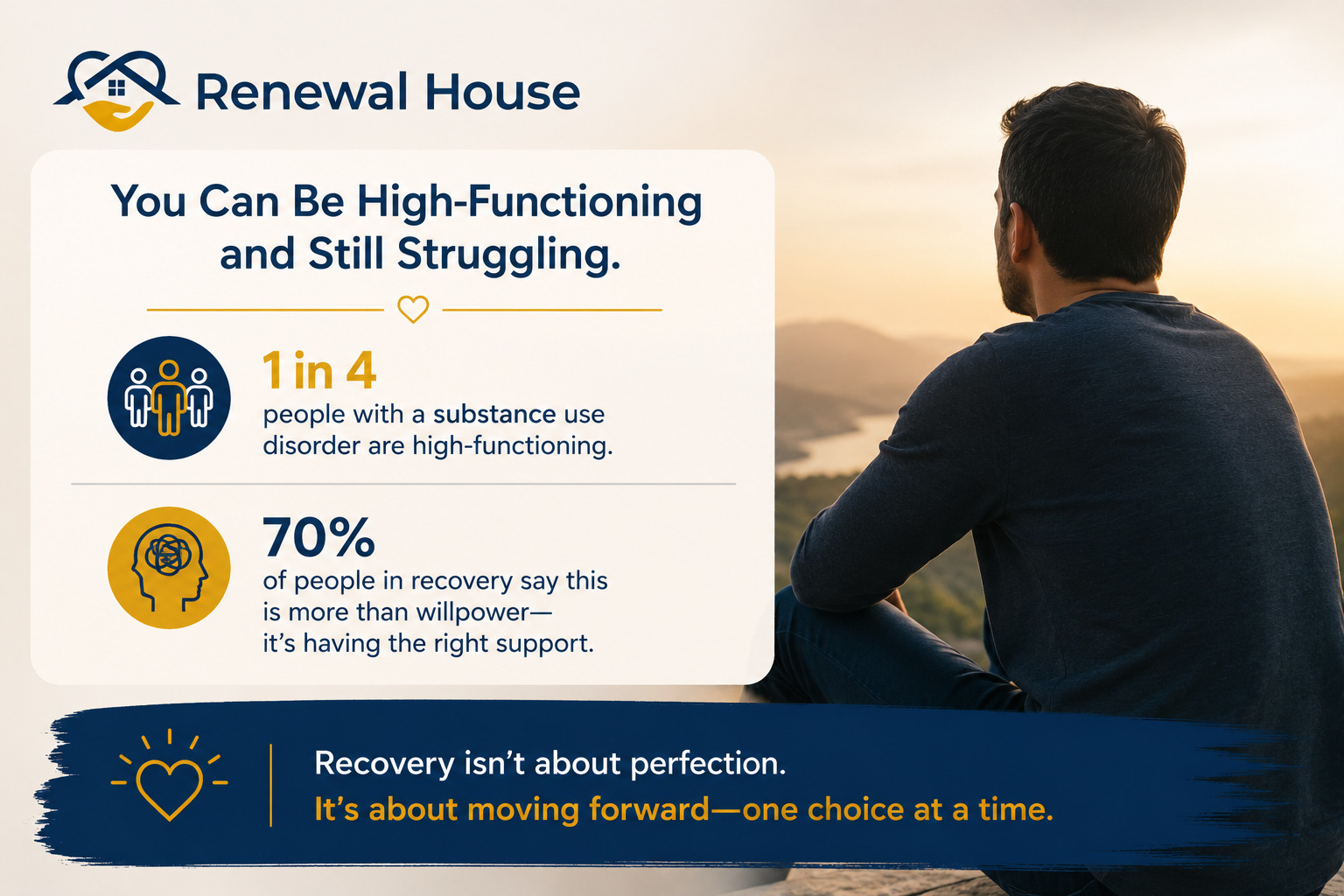
High-functioning people often receive praise for their ability to keep going.
They’re dependable.
They’re productive.
They’re responsible.
The problem is that these strengths can also become barriers.
When someone is still performing well at work, it’s easy to convince themselves that things aren’t serious.
When someone is still meeting family responsibilities, it’s easy to minimize concerns.
When someone is still achieving goals, it’s easy to ignore warning signs.
But functioning and wellness are not the same thing.
I’ve worked with executives who were receiving promotions while quietly drinking more every year.
I’ve worked with parents who never missed a school event but spent every evening numbing themselves with alcohol.
I’ve worked with professionals who looked calm and successful to everyone around them while privately battling anxiety, depression, or substance dependence.
Their lives weren’t falling apart.
Their quality of life was.
Why Success Can Delay Help
One of the most challenging aspects of high-functioning addiction is that success often creates permission.
People tell themselves:
“I’m still doing my job.”
“My family doesn’t know.”
“I’m not drinking in the morning.”
“I’ve never gotten into legal trouble.”
“I’m not as bad as other people.”
These comparisons can provide temporary comfort.
They can also keep someone stuck for years.
Addiction doesn’t always announce itself dramatically.
Sometimes it enters quietly.
It becomes part of a nightly routine.
A stress-management strategy.
A reward.
A coping mechanism.
A source of relief.
Then one day a person realizes they haven’t had a peaceful evening without alcohol in years.
Not because they’re incapable of stopping.
Because they no longer know how to relax without it.
The Story Behind the Search
Many people searching treatment-related terms online aren’t actually looking for treatment.
They’re looking for reassurance.
They’re hoping to discover that things aren’t serious.
They’re searching because something feels off.
The person typing questions late at night often isn’t in denial.
They’re conflicted.
Part of them knows something needs to change.
Another part is convinced they should be able to handle it themselves.
This internal tug-of-war is common among high-functioning individuals.
They’ve spent their entire lives solving problems.
Asking for help can feel unfamiliar.
Sometimes it even feels like failure.
But one of the most important lessons recovery teaches is that self-sufficiency has limits.
No one was meant to carry everything alone forever.
The Level of Support Many People Overlook
One misconception I encounter regularly is the belief that treatment only exists at two extremes.
Either someone keeps living exactly as they are.
Or they enter a highly intensive treatment environment.
Reality is much more nuanced.
Recovery support exists across a range of care options designed to meet different needs and circumstances.
For many high-functioning individuals, discovering this can be a turning point.
The phrase ASAM 3.1 level of care often appears during that search process because people are trying to understand where they fit.
Not because they’re in complete crisis.
Because they’re looking for structure without feeling like they’ve lost their entire life.
Many are relieved to learn that treatment isn’t a punishment.
It’s a resource.
The goal isn’t to take someone’s life away.
The goal is to help them reclaim it.
What Successful Recovery Stories Have in Common
People often assume recovery success stories begin with dramatic moments.
Rock bottoms.
Interventions.
Life-altering crises.
Sometimes that’s true.
More often, the turning point is surprisingly quiet.
A person gets tired of negotiating with themselves.
They get tired of promising they’ll cut back tomorrow.
They get tired of waking up with anxiety.
They get tired of pretending everything is fine.
The most successful recovery stories I’ve witnessed rarely start with confidence.
They start with honesty.
One client admitted he couldn’t remember the last time he genuinely relaxed without alcohol.
Another realized she spent more time thinking about drinking than she spent enjoying it.
A third recognized that every vacation, celebration, and stressful day revolved around substances.
None of these people looked like stereotypes.
They looked like successful adults.
And that’s exactly why their struggles were easy to overlook.
The Difference Between Coping and Living
Many high-functioning individuals become exceptionally skilled at coping.
They cope with stress.
They cope with anxiety.
They cope with loneliness.
They cope with burnout.
Eventually, coping becomes their lifestyle.
The problem is that coping and living are not the same thing.
Living includes joy.
Presence.
Connection.
Energy.
Peace of mind.
Many people don’t realize how much they’ve been surviving until they experience what it feels like to stop surviving.
One former client described recovery this way:
“I didn’t realize how much mental space alcohol was taking up until it wasn’t there anymore.”
That observation stays with me.
Because addiction often occupies far more space than people realize.
It influences schedules.
Decisions.
Relationships.
Thought patterns.
Emotions.
Removing that burden can create room for life to return.
Strength Sometimes Looks Like Letting Go
High-functioning individuals often pride themselves on resilience.
They push through difficulties.
They work harder when problems arise.
They rarely ask for help.
Those qualities can create remarkable success.
They can also create isolation.
Many people assume strength means carrying more weight.
Recovery often teaches the opposite.
Sometimes strength means acknowledging the weight has become too heavy.
Sometimes strength means accepting support.
Sometimes strength means admitting that surviving isn’t the same as thriving.
One of the biggest perspective shifts I see in treatment is when someone stops viewing help as weakness and starts viewing it as wisdom.
That shift changes everything.
You Don’t Have to Lose Everything to Change Something
Perhaps the most important message I can offer is this:
You do not need to wait.
You do not need a DUI.
You do not need a divorce.
You do not need to lose a job.
You do not need a catastrophic event.
You do not need to prove your suffering.
Many people seek treatment before their lives collapse.
That’s not overreacting.
That’s being proactive.
The earlier someone addresses a problem, the more opportunities they have to protect the things that matter most.
For individuals seeking support throughout West Virginia, services are available through programs providing help in Charleston and other communities across the state. Those in different regions may also find valuable care in Barboursville, WV.
A Different Question to Ask Yourself
If you’re high-functioning, you may still be wondering whether treatment is necessary.
That’s understandable.
But perhaps the question isn’t:
“Am I functioning?”
Maybe the better question is:
“Am I living the way I want to live?”
Those are very different conversations.
One focuses on survival.
The other focuses on quality of life.
One asks whether you can keep going.
The other asks whether you deserve something better than simply getting through the day.
Most people already know the answer.
They’re just waiting for permission to listen to it.
Frequently Asked Questions
What does high-functioning addiction mean?
High-functioning addiction refers to situations where a person continues meeting responsibilities such as work, family obligations, and financial commitments while struggling with alcohol or substance use.
Can someone need treatment even if they’re successful?
Yes. Professional success does not eliminate the possibility of addiction. Many people seek treatment while maintaining careers, relationships, and other responsibilities.
Why do high-functioning people wait so long to seek help?
Many compare themselves to extreme examples of addiction and conclude their situation isn’t serious enough. Success can make it easier to ignore warning signs.
Is treatment only for people who have hit rock bottom?
No. Many individuals enter treatment before experiencing major consequences. Seeking help early can often prevent more significant problems later.
How do I know if alcohol has become a problem?
Warning signs may include difficulty cutting back, using alcohol to manage emotions, thinking about drinking frequently, or feeling unable to relax without it.
What is ASAM 3.1?
The ASAM 3.1 level of care refers to a structured recovery environment designed for individuals who need ongoing support while developing recovery skills and stability.
Can treatment help if I’m still working and supporting my family?
Absolutely. Many treatment options are designed for individuals who want to address substance use while protecting important areas of their lives.
What’s the biggest misconception about treatment?
Many people believe treatment is only for those in severe crisis. In reality, treatment is often most effective when someone seeks support before major consequences occur.
Call (304) 601-2279 or visit our alcohol treatment services to learn more about our treatment, alcohol treatment services Huntington, West Virginia.
