
If you’re thinking about entering a residential treatment program, you’re probably carrying a lot more than questions. You might be scared, unsure, or even ashamed. You might be wondering: What if I can’t do it? What if I walk in and everyone can tell I don’t belong? What if I fall apart and can’t put myself back together?
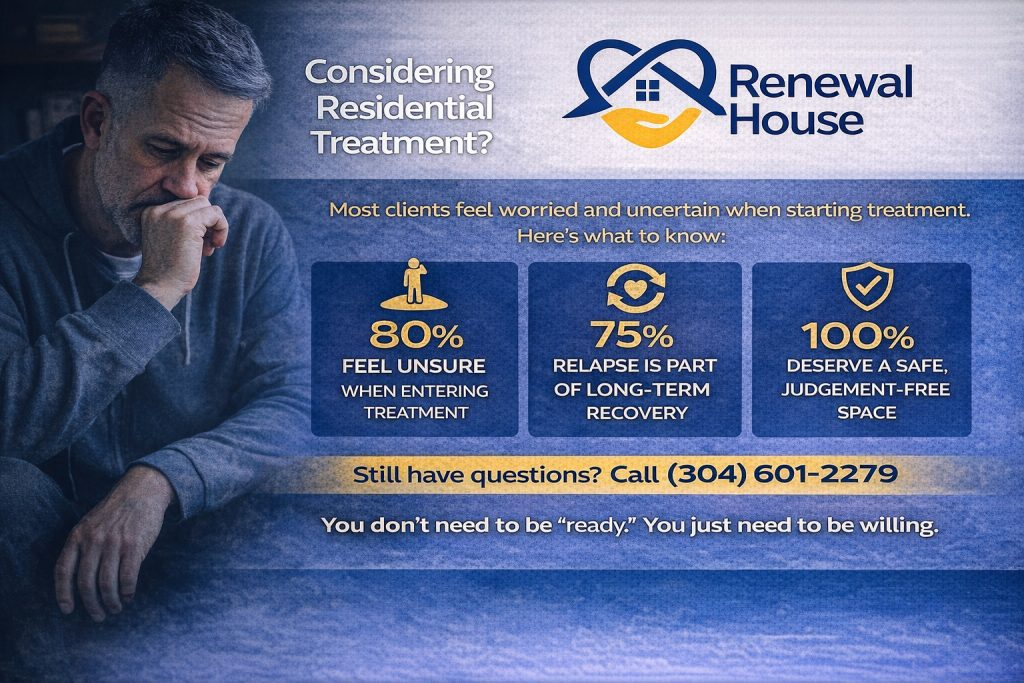
First, take a breath: you are not alone in those fears. The truth is, most people who begin treatment don’t feel “ready.” What matters isn’t perfection or certainty—it’s willingness. And even if you’re unsure, the fact that you’re asking these questions already means something is shifting.
At Renewal House, our residential addiction treatment program is designed for real people with real fears—not for people who have everything figured out. Let’s walk through what this kind of program actually requires from you—and what it absolutely does not.
You Don’t Have to Be Fixed—You Just Have to Show Up
You might be thinking, “I don’t want to waste anyone’s time. What if I’m not serious enough? What if I leave?” But here’s the thing—residential treatment doesn’t require you to come in “all better” or certain that you’ll stay forever. It just asks you to walk through the door, even if your hands are shaking.
If you’re overwhelmed, that’s okay. If you’re not sure you belong here, that’s okay too. Residential treatment is built to hold people in those exact moments. Not after they’ve already healed. Not after they’ve figured it all out.
Honesty Is More Valuable Than Good Behavior
One of the most powerful things you can bring into treatment is honesty—especially when it’s messy. In early recovery, a lot of people fall into “good patient” mode: nodding in groups, saying the “right” things, trying to earn approval. But healing doesn’t happen in performance.
You don’t need to impress anyone here. You’re allowed to say, “I don’t know if I want this,” or “I’m still using,” or “I’m terrified of sobriety.” Residential programs create space for those truths—not just the easy ones.
It’s Okay if You Don’t Trust the Process Yet
Let’s be real: you don’t have to believe in treatment on day one. We don’t expect instant trust. In fact, many people arrive feeling skeptical. Maybe you’ve been to treatment before. Maybe someone else pushed you to go. Maybe you’ve heard promises that didn’t deliver.
We’re not here to convince you that this will work—we’re here to walk with you as you find out for yourself. We’ll earn your trust one moment at a time, not demand it up front.
Emotional Work Is the Real Work—and It’s Okay If That Scares You
A residential treatment program will give you structure, support, and a safe space—but it’s not a vacation. The emotional work is real. That might mean facing grief, naming trauma, feeling feelings you haven’t allowed yourself to feel in years.
And yes, it can be hard. But hard doesn’t mean impossible. The beauty of a residential program is that you don’t have to do it alone. You’ll have therapists, peers, and staff beside you. You’ll be held through the breakdowns, not judged for having them.
Your Life Outside Will Still Be There
One of the biggest barriers to entering treatment? Life. Jobs, bills, kids, pets, relationships—it can feel like stepping away is a luxury you can’t afford. But let’s flip that.
What if stepping away is the only way to come back whole?
Everything you’re managing now will still be there. But you might not be, unless something changes. A residential program gives you the space to reset—so you can return to your life with more clarity, strength, and actual support.
You’ll Have to Practice Accepting Support
For many people, this is the hardest part—not detox, not group therapy, but letting someone else help. Letting yourself cry in front of a stranger. Saying, “I need you” without shame. This kind of vulnerability can feel foreign or even unsafe at first.
But here’s what we’ve seen over and over again: the people who allow themselves to receive care—imperfectly, awkwardly, slowly—are the ones who find lasting change.
You don’t need to know how to accept help. You just need to be willing to try.
You Won’t Lose Yourself—You’ll Meet Yourself Again
One of the most common fears is this: Will treatment erase who I am?
If you’ve built your identity around substances or survival, it can feel terrifying to let go. But recovery isn’t about becoming someone else. It’s about remembering the version of you that never got a chance to breathe.
You don’t have to give up your personality, creativity, or voice. You just get to lay down the chaos that’s been weighing on you—and maybe, for the first time, hear yourself clearly.
What About Location-Specific Support?
If you’re near Charleston or looking for support in the Eastern Panhandle of West Virginia, know that Renewal House offers accessible, respectful care designed for people just like you—people who are afraid and ready.
Visit our pages on treatment options in Charleston or support in the Eastern Panhandle of West Virginia to see how close real help can be.
FAQ: What First-Time Clients Ask About Residential Treatment
Will I have to talk in groups right away?
Nope. While group therapy is an important part of treatment, you’ll never be forced to speak before you’re ready. Many clients start by simply listening—and that’s valid.
Can I still talk to my family while I’m in treatment?
Yes. Most programs allow scheduled phone calls and visits, depending on where you are in your recovery process. We’ll help you create safe, supportive boundaries.
Do I have to stay the whole time if I change my mind?
While we encourage clients to stay the full length of the program for the best outcomes, you are not locked in. We’ll talk with you if you’re struggling and help you make the best decision for your health and safety.
What if I relapse after I leave?
Relapse does not mean failure. It means you’re still learning. We help you build a realistic, compassionate aftercare plan so that if relapse happens, you’re not starting over—you’re picking up from experience.
How do I know if residential treatment is right for me?
If you’ve tried to stop on your own and can’t… if your life is getting smaller… if you’re scared and don’t know what else to do—residential treatment might be your best next step. You don’t have to decide alone. Call us. Let’s talk about it.
📞 Still have questions? Feeling unsure, but open? That’s more than enough.
Call us at (304) 601-2279 or visit to learn more about our residential treatment program services in West Virginia.
We’re not here to fix you. We’re here to welcome you back to yourself. One step at a time.
