
There’s a specific kind of panic that sets in when you realize your child—who once thrived—is now unraveling. For many parents, especially those watching their young adult struggle after military service, that fear is constant. You’re not just grieving who they were—you’re scared of what might come next.
At Renewal House, we understand how overwhelming that feels. That’s why our veterans program is built around three non-negotiables: structure, safety, and support. These aren’t just clinical concepts. For families in crisis, they’re lifelines.
What Is a Veterans Program?
A veterans program is a specialized behavioral health treatment track designed for individuals who have served in the military. It recognizes the unique stressors veterans face—such as trauma exposure, reintegration difficulty, and identity loss—and addresses those through trauma-informed care, peer support, and a structured daily routine.
At Renewal House, our veterans program blends mental health stabilization with personalized therapeutic support, all within a setting designed to help veterans feel seen and safe.
Why Structure Matters for Struggling Veterans
When mental health symptoms worsen, routines often fall apart. Sleep becomes erratic. Meals get skipped. Days blur together. This chaos isn’t just a symptom—it’s a driver of deeper distress.
In our program, we restore rhythm. Veterans wake up at the same time each day, participate in therapeutic groups, meet regularly with clinical staff, and engage in physical activity and communal meals. It may sound simple, but structure is often the first step toward feeling human again.
Structure doesn’t just organize the day—it calms the nervous system. For someone spiraling, that’s everything.
How We Create a Sense of Safety
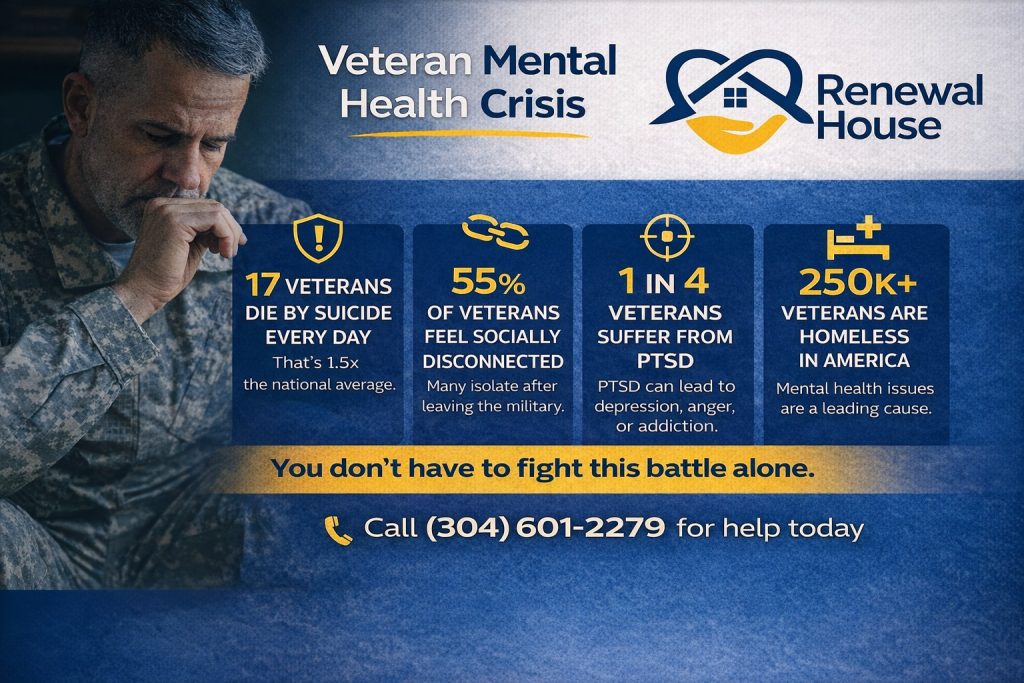
Many veterans carry invisible injuries. PTSD, hypervigilance, and moral injury make trust difficult. That’s why our program environment is carefully designed to be non-triggering, quiet, and trauma-informed.
Here’s what that means in practice:
- Small group settings where voices are heard without being drowned out
- Clinicians trained in military culture and trauma
- No shaming, ever—only respect and clarity
- Veterans-only spaces that honor lived experience
For parents, this is crucial. You need to know your child isn’t just “in treatment”—they’re somewhere that feels emotionally safe.
Support That Includes the Family
You’ve likely tried everything you know. Called. Begged. Cried. Googled late into the night. Our program doesn’t just support the veteran—we support you too.
We provide:
- Family communication coaching, so you don’t have to walk on eggshells
- Regular updates (with your loved one’s consent) to keep you in the loop
- Family education about trauma, boundaries, and healing
You didn’t cause this. And you don’t have to fix it alone.
For families located nearby, we encourage connection with our extended community of support in Charleston or those seeking care in the Eastern Panhandle of West Virginia.
How Veterans Regain Their Voice and Identity
Military service creates a powerful identity. When mental health symptoms cloud that identity, it can feel like losing a sense of purpose.
That’s why we focus on:
- Peer connection with other veterans in similar stages of healing
- Creative and expressive therapies to help rebuild internal strength
- Vocational and educational goal-setting to imagine life beyond symptoms
One veteran shared with us:
“For the first time in years, I didn’t feel broken. I felt like I mattered.”
– Veterans Program Participant, 2023
How Long Is the Program, and What Comes Next?
Most veterans stay with us for 30–90 days depending on clinical needs. Our team works with each individual to create a plan for what comes after—whether that’s outpatient support, sober living, or reintegration home with continued care.
We also collaborate with VA resources and local community partners to ensure there’s no sudden drop-off after discharge. The goal isn’t just stabilization—it’s momentum.
Signs a Veterans Program Might Be Right
You might not know what to call what’s happening. But you know it’s serious. If your loved one:
- Is isolating more than usual
- Seems emotionally volatile or numb
- Has stopped attending work or school
- Expresses hopelessness, rage, or disconnection
- Talks about military experiences with shame or fear
…it may be time to explore structured help.
There’s no shame in needing support. And there’s strength in choosing it.
Frequently Asked Questions
What makes a veterans program different from regular mental health treatment?
Veterans programs are built to understand military culture. That includes combat trauma, hyper-independence, and difficulty asking for help. Treatment is adapted to respect these realities and help veterans feel understood—not pathologized.
Can families be involved in treatment?
Yes, and we encourage it. With the veteran’s consent, families can participate in education, support sessions, and occasional therapy. We help you reconnect in healthy, hopeful ways.
What if my loved one doesn’t want help?
Many veterans hesitate to accept support. We’re skilled in working with reluctant participants and offer entry points that feel non-threatening. Often, once they arrive, they realize they’re not alone—and that changes everything.
Is this program residential?
Yes. Our veterans program is residential, meaning participants live on-site. This allows us to provide intensive, immersive support in a safe and structured setting.
Rebuilding Doesn’t Have to Happen Alone
The hardest part of watching someone struggle is feeling like you’re on the outside—screaming for help with no response. But your voice matters. Your love matters. And there are people who know how to help.
If your loved one is a veteran in behavioral health crisis, we invite you to explore our veterans program. Let us carry this with you.
📞 Call (304) 601-2279 or visit to learn more about our veterans program services in in Comfort, West Virginia.
